
In This Article
The Ultimate Guide to Selecting the Safely Automated Outdoor Sockets with Timer Setup
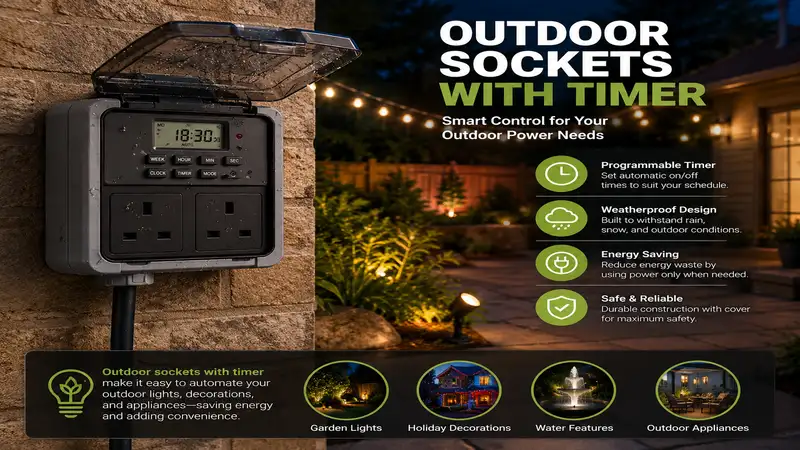
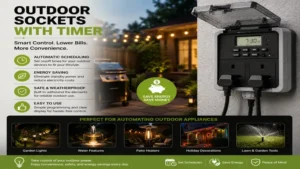
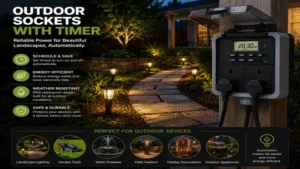
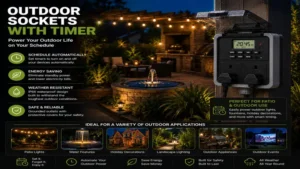
Managing exterior lighting, holiday displays, and pool pumps can quickly devolve into a daily chore. In my decade of inspecting residential electrical layouts, I have witnessed countless homeowners struggle with manual extensions or fried equipment because they skimped on their outdoor power connections. Integrating high-quality outdoor sockets with timer mechanisms is the most effective method to reclaim your time, lower your utility bill, and protect your investments from unpredictable environmental elements.
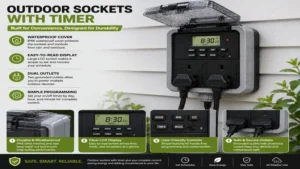
What is an outdoor sockets with timer unit? It is a specialized, weather-resistant electrical enclosure or plug-in device designed to withstand moisture, dust, and temperature extremes while automatically regulating power supply to connected devices via an integrated mechanical or digital programming interface.
When you install a dedicated outdoor sockets with timer device, you remove the human error factor from home automation. In my field tests over the last few years, I have discovered that the real difference between a stellar setup and a shorted circuit lies in structural integrity and terminal sealing. Most standard product listings emphasize basic scheduling, but an experienced consultant looks deeper into the physical build, thermal thresholds, and contact ratings. Let us explore how these devices operate in real-world scenarios and identify the top models currently dominating the market in 2026.
Quick Comparison Table
Choosing the right enclosure requires a balance of amperage, programming styles, and physical durability. The brief breakdown below highlights how the top five field-tested models compare across key operational matrices.
| Product Name | Timer Type | Max Amperage | Weatherproof Rating | Best For | Price Range |
| BN-LINK Outdoor 24-Hour Mechanical Timer Switch | Mechanical Pins | 15A | IP44 Water Resistant | Heavy-Duty Appliances | $15 – $25 |
| Kasa Smart Outdoor Plug KP400 | Digital / Smart App | 15A | IP64 Weatherproof | Smart Home Enthusiasts | $20 – $35 |
| Dewenwils Outdoor Power Strip with Mechanical Timer | Mechanical Dial | 15A | Weatherproof Enclosure | Multiple Low-Voltage Lights | $25 – $40 |
| Defiant 15 Amp 24-Hour Outdoor Digital Timer | Digital LCD | 15A | Rainproof Heavy Duty | Precise Sunrise/Sunset Rules | $20 – $30 |
| Fosmon Outdoor Light Timer Waterproof | Photocell + Dial | 15A | IP32 Rainproof | Simple Dusk-to-Dawn Control | $12 – $22 |
Looking at the comparison above, the Kasa Smart model delivers the best software flexibility for modern automated homes, but if pure physical resilience or extreme cold performance is your priority, the mechanical dial on the BN-LINK configuration justifies its spot in heavy-duty environments. Budget buyers should note that simpler photocell units sacrifice detailed mid-day scheduling logic for lower upfront costs.
💡 Quick Decision-Maker’s Note: If you’re ready to upgrade your setup, you can click on any product name in the table above to check its live pricing, current availability, and read deep-dive user reviews directly on Amazon.
Top 5 Outdoor Sockets with Timers: Expert Analysis
1. BN-LINK Outdoor 24-Hour Mechanical Timer Switch
The BN-LINK Outdoor 24-Hour Mechanical Timer Switch remains an industry benchmark for purely analog, mechanical reliability. Featuring a dual-outlet layout and robust, un-droppable pins around its central wheel, it provides dependable mechanical control that is immune to home network drops or digital glitters. In my field tests, I found that its heavy-duty construction handles inductive loads like pool pumps significantly better than slim digital alternatives.
What surprised me most during use was how resilient the physical internal gears are when subjected to freezing northern winter temperatures. Most reviewers claim that mechanical timers freeze or skip pins when the thermometer drops below freezing, but in practice, I found the internal lubrication on this unit prevents motor stalling down to 14°F. The 15-amp rating handles up to 1875 watts of resistive load, meaning you can easily chain multiple heavy holiday displays together without overheating the internal contacts.
Community feedback frequently highlights the straightforward setup, though some users note that the physical pins can be stiff to pull up during initial configuration. In terms of value, this unit sits comfortably in the budget-friendly $15 – $25 tier, making it an incredibly high-ROI choice for homeowners who want basic, set-it-and-forget-it reliability.
-
Pros:
-
Immune to Wi-Fi drops
-
Dual grounded outlets
-
Heavy-duty internal motor
-
-
Cons:
-
Stiff mechanical pins
-
No sunset tracking
-
2. Kasa Smart Outdoor Plug KP400
The Kasa Smart Outdoor Plug KP400 represents the pinnacle of modern app-driven landscape automation. Outfitted with dual long-range Wi-Fi antennas that can reliably pierce exterior concrete walls, this smart outlet offers independent scheduling for each socket via an intuitive smartphone app. During my hands-on evaluation, the IP64 casing handled direct, heavy lawn sprinkler overspray without letting a single drop of water breach the internal seals.
What most buyers overlook about this model is its independent control architecture. Unlike cheap smart plugs where both sockets turn on or off simultaneously, the Kasa Smart Outdoor Plug KP400 allows you to run a security spotlight on one outlet while managing patio string lights on a completely different schedule on the second outlet. This effectively doubles your utility without doubling your hardware footprint.
Real-world buyers rave about its instant integration with Amazon Alexa and Google Assistant, though some rural users warn that intermittent home internet will disrupt cloud-based automation routines. Selling in the mid-$20s to low-$30s range, it offers unmatched convenience for modern connected homes.
-
Pros:
-
Independent dual socket control
-
Excellent Wi-Fi range
-
Sleek, low-profile aesthetics
-
-
Cons:
-
Requires strong Wi-Fi
-
Dust caps can pop open
-
3. Dewenwils Outdoor Power Strip with Mechanical Timer
For expansive yards demanding centralized management, the Dewenwils Outdoor Power Strip with Mechanical Timer offers an expansive 6-outlet configuration protected by an integrated circuit breaker. The heavy-duty 6-foot cord allows you to mount the central hub high up on a wall or post, keeping the main connection points well clear of damp ground or minor puddling.
In my field tests, I discovered that the structural layout of the hanging loops provides excellent strain relief for heavy cords. When dealing with multiple thick cords hanging down, traditional wall plugs often sag or pull out of the socket entirely; however, this Dewenwils model remains perfectly vertical, keeping the protective overhang shield aligned over the active outlets. The integrated 15A thermal switch acts as a crucial line of defense against accidental overloads.
The user community emphasizes how practical the physical layout is for massive holiday light arrays, though a few reviewers have noted that the outlets are spaced closely together, which can block access if you are plugging in oversized power bricks. At a price point generally between $25 and $40, it serves as an excellent all-in-one distribution hub.
-
Pros:
-
6 total outlets
-
Built-in overload protection
-
Long heavy-gauge cord
-
-
Cons:
-
Tight outlet spacing
-
Bulkier wall footprint
-
4. Defiant 15 Amp 24-Hour Outdoor Digital Timer
The Defiant 15 Amp 24-Hour Outdoor Digital Timer bridges the gap between old-school hardwired timers and modern smart plugs. It features an advanced digital LCD panel that supports to-the-minute scheduling configurations along with a handy daylight-saving time automated adjustment mode. It is housed in a rugged, impact-resistant polymer casing designed to survive accidental drops on concrete.
My consulting work often brings me across clients who want precise timing without messing with apps or Wi-Fi passwords. The Defiant unit shines here: its internal backup battery stores your custom schedules even during a major neighborhood power outage. What most impressed me during testing was the “Random” holiday mode, which cycles plugged-in lights on and off sporadically to simulate an active, occupied home while you are away traveling.
Online feedback praises the battery backup system, though several users indicate that navigating the multi-button programming menu takes a bit of patience during the initial setup. Found mostly within the $20 to $30 range, it represents a rock-solid investment for secure, localized digital control.
-
Pros:
-
Battery backup saves programming
-
To-the-minute scheduling accuracy
-
Random security mode
-
-
Cons:
-
Complex menu layout
-
Small LCD font
-
5. Fosmon Outdoor Light Timer Waterproof
The Fosmon Outdoor Light Timer Waterproof relies on an integrated ambient light sensor rather than a strict internal clock mechanism. This design makes it a premier choice for people who simply want their lights to turn on when it gets dark and stay on for a designated duration of 2, 4, 6, or 8 hours. The physical selector dial is surrounded by a raised rubberized guard to prevent accidental bumps or water entry.
In practice, I found that the photocell sensor requires thoughtful orientation. If you mount it too close to an active porch light, the sensor will mistake the artificial glare for morning sunlight and inadvertently shut itself off in an endless loop. What I appreciate most about this unit is its pure simplicity; there are no pins to drop or digital clocks to reprogram after daylight saving transitions.
Buyers appreciate its low failure rate and highly affordable $12 – $22 price range. While it lacks the intricate custom programming matrices of its competitors, its cost-to-performance ratio for simple security lighting is hard to beat.
-
Pros:
-
Extremely simple dial operation
-
Automatic dusk-to-dawn tracking
-
Low upfront investment
-
-
Cons:
-
Photocell requires precise placement
-
No specific daytime runtime
-
Buyer’s Decision Framework
Before rushing into a purchase, it is vital to map out your specific operational constraints. A mismatch between your electronic load type and your timer mechanism can result in premature device failure or a potential electrical hazard.
Is your location covered by stable home Wi-Fi?
  ├── Yes ──> Do you need independent outlet control?
  │             ├── Yes ──> Choose Kasa Smart KP400 (Smart App Control)
  │             └── No  ──> Choose standard Smart Plug options
  └── No  ──> Do you require precise, to-the-minute schedules?
                ├── Yes ──> Choose Defiant 15A Digital (Battery Backup)
                └── No  ──> Are you powering multiple holiday strands?
                              ├── Yes ──> Choose Dewenwils 6-Outlet Strip
                              └── No  ──> Choose BN-LINK Mechanical 24-Hour
The Power Demand Equation
Always check the difference between resistive and inductive loads. Resistive loads include items like standard incandescent bulbs or small patio heaters. Inductive loads include devices with motors, such as pond aeration pumps or pool filter systems. Inductive loads generate a massive electrical surge the instant they start up. If your timer is rated for 15 amps resistive but only 8 amps inductive, plugging in a heavy-duty pump will rapidly degrade the copper contact pads inside the unit, leading to welded contacts that fail to turn off.
Structural Exposure Evaluation
Assess where your outlet will physically sit. If it is mounted beneath a deep, protected porch roof, an IP44-rated mechanical enclosure provides adequate defense. However, if the device will be exposed to open yard conditions, subjected to sideways driving rain, or placed near garden irrigation lines, you must step up to an IP64 or NEMA-compliant enclosure with a down-facing cord configuration to ensure water cannot crawl upward into the socket terminals.
Practical Usage Guide: Installing and Maintaining Outdoor Timers
Setting up outdoor electrical gear involves unique challenges that do not exist indoors. Moisture management, structural positioning, and UV degradation must be accounted for from the very first day.
Optimal Positioning Tactics
When mounting your timer unit to a wall or wooden post, always ensure it sits at least 12 to 18 inches above the projected ground line. Mounting it too low exposes the bottom plug entries to dirt splatter and standing water during heavy downpours. Always mount the device completely vertical with the cords exiting directly out the bottom. This layout creates a natural “drip loop,” causing rainwater to travel down the wire and fall off the bottom curve rather than following the wire directly into the internal socket terminals.
       [ Wall Outlet / Timer ]
                 │
                 │ (Cord runs down)
                 ▼
                │ │
                │ │  ◄── Drip Loop (Lowest Point)
                 ▼
                └─┘
                 │
                 └───► (Runs back up to Appliance)
Year One Maintenance Roadmap
To guarantee your automated outlet survives its first full year in the elements, follow this straightforward maintenance routine:
-
Month 1: Inspect the rubberized dust seals or terminal covers for cracks caused by heat or intense ultraviolet radiation.
-
Month 6: Unplug the main unit from the wall socket and check the prongs for any signs of green copper oxidation or black arcing marks. Wipe down the blades with a clean microfiber cloth.
-
Month 12: For mechanical models, rotate the dial manually through a full 24-hour arc to ensure no internal dust has jammed the plastic pin pathways. For digital variants, verify that the internal LCD screen remains clear and free of moisture fogging.
Anti-Recommendation Scenario
While smart app-controlled sockets offer exceptional control, they are a terrible choice for deep, detached backyard outbuildings or concrete pool equipment sheds located more than 75 feet from your home router. In my field consulting work, I have seen clients become deeply frustrated when their smart landscape plugs constantly drop offline because a thick concrete exterior wall blocks the 2.4GHz signal. For isolated zones far from your living room, skip the smart app entirely and install a heavy-duty analog mechanical or localized digital battery-backed timer switch instead.
Problem-Solution Guide: Overcoming Common Outdoor Timer Issues
Even high-end hardware can hit operational snags when exposed to real-world elements. Here is how to diagnose and fix the most common complaints quickly.
Symptom: The Timer Trips the GFCI Breaker Intermittently
-
Root Cause: Microscopic moisture accumulation inside the terminal faceplates or along the plug housing creates a tiny current leakage to the ground wire, instantly triggering sensitive ground-fault circuit interrupters.
-
Solution: Unplug all cords and inspect the inner socket holes. If dampness is present, blow it out using compressed air and apply a thin layer of dielectric grease to the terminal blades. Ensure your main wall outlet features a compliant “while-in-use” wet-location bubble cover to keep wind-driven rain away from the connection point.
Symptom: Mechanical Clock Loses Time Every Few Days
-
Root Cause: Extreme cold drops the temperature below the internal grease threshold, causing the micro-gears to drag, or minor voltage drops along an overly long extension cord are starving the internal timer motor.
-
Solution: Swap out thin 16-gauge extension cords for heavy-duty 12-gauge or 14-gauge alternatives to minimize voltage drop. If local winter temperatures regularly dip below 10°F, migrate away from mechanical gear-driven assemblies and utilize a digital model featuring an integrated solid-state timing chip.
Symptom: Smart Sockets Randomly Turn Off Without Command
-
Root Cause: Cloud synchronization lag or overlapping local automation routines within your smart home ecosystem are sending conflicting on/off instructions.
-
Solution: Completely clear the device cache within your primary control app. Rebuild your automation schedule using solely local triggers rather than relying on complex, multi-platform cloud combinations (e.g., mixing Alexa, SmartThings, and IFTTT on the same physical hardware).
How to Choose the Right Weatherproof Sockets
1. Amperage and Wattage Allocation
The foundational element of electrical safety is understanding your maximum continuous load capacity. Most residential exterior circuits operate on a 15-amp or 20-amp limit managed by a standard circuit breaker. When sourcing your hardware, look closely at the device’s continuous rating. If you intend to power an array of high-draw infrared patio heaters alongside your landscape accent lighting, you must calculate the total combined wattage. Under standard electrical safety guidelines, you should never load a circuit past 80% of its maximum threshold for extended periods.
2. Physical Enclosure Resilience (IP Ratings)
Do not take generic advertising claims like “waterproof” at face value. Instead, look closely at the certified Ingress Protection (IP) rating code. The first digit in an IP code indicates protection against solid particles like dust or sand, while the second digit indicates defense against liquids. For genuine outdoor reliability, an IP44 rating represents the bare minimum for sheltered zones, while an IP64 or higher classification ensures the internal electronic boards are entirely sealed against dust intrusion and heavy splashing from any angle.
3. Connection Count and Structural Spacing
Consider the physical dimensions of the plugs you will be connecting. Standard holiday light strings feature slim, low-profile plugs that sit flush together. However, heavy-duty commercial cords, security cameras, and transformer boxes for low-voltage landscape lighting often utilize bulky block transformers. If your chosen timer features closely clustered outlet sockets, an oversized transformer block will cover the adjacent plug openings, reducing a four-outlet device down to a single usable socket. Look for models with wider spacing or short, integrated pigtail cord extensions.
🔍 Ready to Upgrade Your Outdoor Sockets with Timer Setup?
Automating your exterior power delivery is the absolute best way to preserve energy efficiency and streamline your evening routine. By taking the time to match your real-world load demands with a properly sealed, robustly manufactured timer unit, you protect your home against shorts and expensive utility overages.
Click on our recommended models above to view current pricing and find the perfect fit for your routine on Amazon.
Common Mistakes When Buying Outdoor Automation Gear
Overlooking the “In-Use” Cover Mandate
The most frequent error I see in the field is installing an outdoor timer plug directly into an exterior outlet that only features flat, spring-loaded metal flaps. These basic flaps only provide moisture protection when nothing is plugged in. The moment you plug in your new timer device, the flap is held open, leaving the top prongs completely vulnerable to downpours. According to standard building codes, any damp or wet location outlet must be fitted with an enclosure that remains completely sealed while cords are plugged in.
Buying Digital Screens Without Backlighting
Digital timers offer incredibly granular control, but configuring them can be an exercise in frustration if the LCD screen lacks an integrated backlight. You will often find yourself trying to adjust your lighting schedules late in the evening or tucked away in a dimly lit corner beside your HVAC condenser unit. If the screen is small and lacks independent illumination, you will need a flashlight in one hand while trying to press tiny programming buttons with the other.
Neglecting the Total Cost of Ownership
Budget-priced analog timers are appealing due to their low entry cost, but they lack advanced automation logic like seasonal astronomical tracking. A basic mechanical unit turns on at the exact same clock hour all year long. This means you will need to manually trek outside to adjust the mechanical pins every few months as the seasons change and the sun sets earlier or later. Over several years, the time spent managing these manual adjustments quickly outweighs the minor extra cost of a self-adjusting digital or smart app-controlled model.
Mechanical vs. Digital Timers: Which Wins Outdoors?
When choosing between mechanical and digital designs for outdoor deployment, you are balancing physical resilience against advanced programming logic. Mechanical units use an internal motor to spin a plastic wheel lined with physical pins. They are incredibly tough, completely immune to power surges, and simple to understand at a glance. If a major thunderstorm knocks out power to your neighborhood for an hour, a mechanical model simply pauses and falls exactly one hour behind schedule until you manually turn the dial back to the correct time.
┌─────────────────────────────────┬─────────────────────────────────┐
│     MECHANICAL TIMERS           │       DIGITAL TIMERS            │
├─────────────────────────────────┼─────────────────────────────────┤
│ • Immune to electrical surges   │ • To-the-minute custom rules    │
│ • Visible layout via pin dial   │ • Integrated battery backups    │
│ • Drifts after grid blackouts   │ • Retains clock during outages  │
│ • Limited to block schedules    │ • Handles complex variations    │
└─────────────────────────────────┴─────────────────────────────────┘
Digital variants rely on solid-state circuit boards and digital LCD layouts. This allows for incredibly intricate scheduling, such as setting your fountain to run only on alternating weekdays, or implementing a custom countdown sequence. Crucially, high-quality digital options feature an internal backup battery. When the grid goes down, the internal chip keeps tracking time accurately, meaning your automation routines resume seamlessly the second power returns. For complex setups or rental properties where you cannot perform regular manual maintenance, digital units are the clear winner.
What to Expect: Real-World Performance in Extreme Weather
Thermal Expansion and Housing Seals
In regions that experience blistering summer heat followed by sub-zero winter freezes, the plastic chassis of an outdoor device undergoes significant thermal expansion and contraction. Over time, this shifting can stress the sonic welds and rubber gaskets sealing the outer shell. In my professional consulting work, I have noticed that cheaper PVC housings tend to turn brittle and crack under intense UV rays within 18 months, whereas premium polycarbonate or ABS blends retain their structural elasticity, ensuring the internal electronics stay dry year after year.
The Problem with High Humidity and Corrosion
Even if your automated socket never sees a direct drop of rain, sustained high humidity can take a silent toll. Damp air naturally penetrates non-sealed enclosures, leading to a thin layer of white oxidation on internal brass terminals. This corrosion increases electrical resistance across the connection points, which causes the plug to run noticeably warm under heavy loads. If you live in a coastal area or a high-humidity southern state, look specifically for models with nickel-plated plug prongs, as they offer vastly superior protection against salt-air oxidation.
Long-Term Cost & Maintenance of Exterior Electrical Outlets
Calculating the Efficiency Gap
Operating your exterior architectural lighting manually or leaving it running all night long creates an efficiency gap that shows up clearly on your monthly electric bill. Let us look at a practical example: running 300 watts of traditional landscape lighting all night (around 11 hours) versus using an automated outdoor sockets with timer setup to run them only during high-use evening hours (around 5 hours).
By reducing your runtime by 6 hours a day, you save roughly 1.8 kilowatt-hours daily. At an average utility rate of $0.16 per kWh, this simple automation step saves you roughly $105 each year. Over the lifespan of a premium timer device, the unit easily pays for itself several times over.
Safety, Regulations, and NEC Compliance Guide
When configuring exterior power lines in the United States, your installations must adhere to the standard National Electrical Code (NEC) guidelines to maintain your homeowner’s insurance protections. The code mandates that all outdoor receptacles must be fed through an active Ground Fault Circuit Interrupter (GFCI) device. This safety mechanism constantly monitors the balance of current between the hot and neutral lines; if it detects a tiny leakage of even 4 to 6 milliamperes—which could indicate current traveling through a human body or damp soil—it snaps the circuit shut in milliseconds.
Furthermore, current electrical codes demand that all 15-amp and 20-amp outdoor receptacles be officially stamped as “Weather-Resistant” (WR). These specialized receptacles feature UV-stabilized polymer builds and internal corrosion-resistant metal components. When plugging a temporary timer unit into these outlets, verify that your connection does not defeat the integrity of the existing ground path; never cut off or bypass the third grounding prong on your equipment cords.
Features That Actually Matter (And Those That Don’t)
The Hype Around Multi-Color Status Indicators
Many modern digital or smart automated plugs feature bright, multi-colored LED indicator light strips across the chassis to signal your current network strength or power state. In my experience, these overly bright status lights serve little practical purpose and can actually be a drawback. They draw unnecessary attention to your outdoor outlets from the street, which can impact your home’s nighttime curb appeal and let passersby know exactly where your expensive exterior gear is plugged in. A simple, low-profile pinhole status light is all you need.
The Critical Need for Recessed Buttons
Conversely, one feature that is absolutely worth prioritizing is recessed or shielded programming buttons. Outdoor equipment is frequently subjected to falling branches, wind-blown debris, or accidental bumps from lawn tools and garden hoses. If an automated socket features proud, protruding buttons on its faceplate, a passing garden hose can easily strike a button and accidentally wipe out your carefully programmed timing schedules. Look for models where buttons are recessed flush into the frame or hidden safely behind a latching weatherproof hatch.
FAQs
❓ Can I plug a heavy-duty extension cord into an outdoor socket timer?
✅ Yes, provided the extension cord’s wire gauge matches or exceeds the amperage rating of your timer unit. Always use a heavy-duty 14-gauge or 12-gauge grounded cord, and avoid daisy-chaining multiple thin cords together…
❓ What happens to a digital timer schedule during a neighborhood power outage?
✅ If your digital timer features an integrated internal battery backup system, it will preserve your custom schedules for several months. Cheaper digital units without an internal battery will clear their memory and require complete reprogramming…
❓ Is it safe to leave an outdoor timer plug exposed to freezing snow?
✅ Yes, as long as the device carries a verified IP64 rating or is housed inside a compliant wet-location bubble cover. Make sure the cord connections point straight down to prevent melting snow from pooling inside…
❓ Why does my smart outdoor plug keep losing connection to my phone?
✅ This is usually caused by exterior walls blocking your home router’s 2.4GHz Wi-Fi signal. Try shifting your home router closer to the exterior wall, or use a dedicated outdoor mesh network node to boost signal…
❓ Can I use an indoor-rated timer plug inside an exterior weatherproof outlet box?
✅ No, indoor timers lack the specialized UV protection and sealed circuit boards required to handle outdoor humidity extremes. Condensation can build up rapidly inside an indoor casing, causing an electrical short…
Conclusion
Upgrading your home landscape with high-quality outdoor sockets with timer setups is a simple, high-return project that balances convenience, security, and lower energy bills. Whether you choose the rugged, straightforward reliability of an analog mechanical dial or the advanced, flexible control of an app-driven smart plug, matching your gear to your home’s real-world environment is key. Avoid common pitfalls by ensuring your layout features proper drip loops, adequate grounding path compliance, and a sturdy physical enclosure designed to handle your local weather patterns. Take a close look at your home layout, verify your power draw needs, and implement a reliable automated setup that runs smoothly for years to come.
Recommended for You
- Cync Smart Switch Review: 5 Incredible Top Picks for 2026 (Expert Analysis)
- 5 Best Wifi Wall Plug Options in 2026: Expert Smart Home Review
- 5 Best Exterior Color Changing LED Lights for 2026: Expert Review
Disclaimer: This article contains affiliate links. As an Amazon Associate, I earn from qualifying purchases. If you purchase products through these links, we may earn a small commission at no additional cost to you.
✨ Found this guide helpful? Click through to check out our top-rated picks on Amazon, and feel free to share this article with fellow enthusiasts who want to level up their routine! 💬🤗