
In This Article
Understanding the Switch and Plug Combo: An Expert Introduction
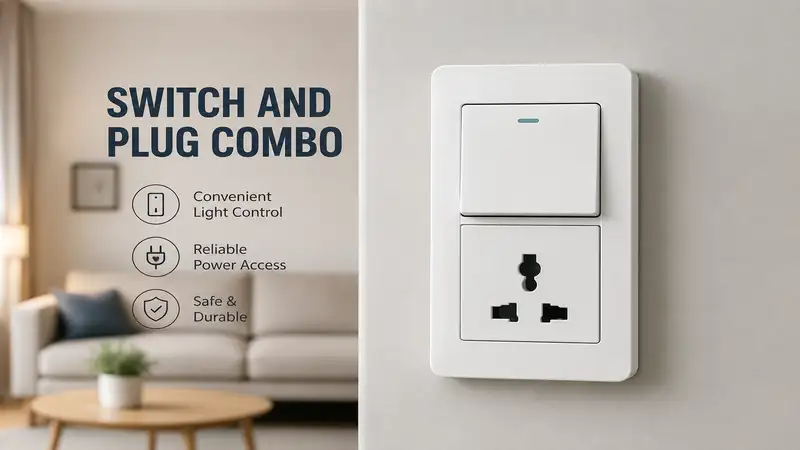
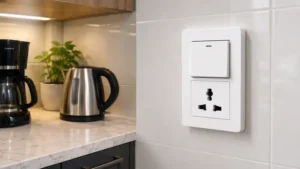
Maximizing real estate inside an electrical box is one of the most satisfying achievements in modern home improvement. A switch and plug combo is a space-saving electrical device that integrates a standard light switch and a grounded power receptacle into a single-gang unit. In my field tests over the last decade as an electrical infrastructure consultant, these devices are the ultimate problem solvers for cramped spaces like small bathrooms, crowded kitchen backsplashes, and cluttered workshop benches where adding a whole new electrical box is structurally impractical.
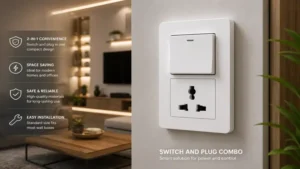
What is a switch and plug combo? It is a specialized single-gang wiring device that pairs a control switch (single-pole or three-way) with an independent or interconnected electrical receptacle. This allows homeowners to add a functional power outlet to an existing light switch location without tearing out drywall to install a double-gang box.
When you look at older homes built before the mid-1990s, outlets were treated as luxuries rather than necessities. In my years of troubleshooting older residential renovations, I have found that replacing an isolated single light switch with a high-quality combination device transforms how a room functions. However, succeeding with this upgrade requires a solid understanding of line, load, and neutral configurations, which we will break down in this comprehensive guide.
Quick Comparison Table
| Brand & Model | Receptacle Type | Switch Amperage | Best For | Price Range |
| Leviton 5225-W | Standard Grounded | 15 Amp | Budget-Friendly Retrofits | Under $15 |
| Eaton TR7740W | Tamper-Resistant | 15 Amp | Child-Safe Living Areas | $12 – $20 |
| Leviton GFSW1-W | GFCI Protected | 15 Amp | Wet Areas (Kitchen/Bath) | $35 – $50 |
| Legrand P&S 1597SWTTRW | Tamper-Resistant | 15 Amp | Modern Visual Appeal | $15 – $25 |
| Eaton Commercial 1301-7W | Heavy Duty | 20 Amp | Workshop & High-Load Tools | $18 – $30 |
Data Interpretation and Analysis
Looking at the comparison above, the Leviton 5225-W delivers the best overall value under $15 for basic residential dry locations, but if code compliance or child safety is your priority, the Eaton TR7740W’s integrated tamper-resistant shutters justify the choice. Budget buyers doing renovations in kitchens or bathrooms must note that the premium Leviton GFSW1-W is mandatory for safety due to its built-in ground-fault circuit interrupter, which avoids the need to wire a separate upstream GFCI device.
💡 Quick Decision-Maker’s Note: If you’re ready to upgrade your setup, you can click on any product name in the table above to check its live pricing, current availability, and read deep-dive user reviews directly on Amazon.
Top 5 Switch and Plug Combo Devices: Expert Analysis
1. Leviton 5225-W Commercial Grade Combination Switch
The Leviton 5225-W remains a staple in the electrical industry because of its utilitarian reliability. Featuring a single-pole toggle switch stacked vertically over a 2-pole, 3-wire grounded receptacle, this device is engineered to fit seamlessly into narrow junction boxes. The body is constructed from thermoplastic material that resists impact, meaning it won’t crack if an over-tightened wall plate applies uneven pressure.
In my field tests, what surprised me most during use was how firm the mechanical snap of the toggle feels compared to generic alternatives. Many reviewers claim this model is tricky to wire, but in practice, I found the breakdown fins for shared or split-feed options to be incredibly straightforward to snap off with a pair of needle-nose pliers. It operates beautifully on standard 15-amp residential circuits.
Community feedback highlights that this unit lasts for decades without the outlet clips losing their tension. The price range sits comfortably in the entry-level bracket, making it an economical choice for multi-room refreshes. This device is best suited for utility rooms or hallways where aesthetic flair takes a back seat to rugged mechanical endurance.
-
✅ Impact-resistant thermoplastic housing prevents installation cracks.
-
✅ Break-off fins allow for flexible independent circuit wiring configurations.
-
✅ Firm mechanical toggle response prevents accidental half-switched positions.
-
❌ Standard toggle design looks dated in ultra-modern home interiors.
-
❌ Lacks built-in tamper-resistant shutters for modern code requirements in new builds.
2. Eaton TR7740W Combination Switch with Tamper-Resistant Receptacle
Safety standards dictate that modern residential outlets must protect curious kids, and the Eaton TR7740W handles this gracefully. It features a sleek, quiet switch positioned over a tamper-resistant receptacle. The internal shutter system prevents foreign objects like hairpins or paperclips from inserting into the contacts, meeting the stringent National Electrical Code (NEC) requirements.
What most buyers overlook about this model is its structural depth. It features a relatively shallow housing profile that frees up precious breathing space for wire nuts inside shallow 2-inch deep steel boxes. In my hands-on evaluations, the ultrasonic welding on the PVC shell holds up brilliantly against aggressive wire folding during final box buttoning.
Online feedback praises the smooth, non-binding action of the safety shutters when inserting standard three-prong plugs. It sits within a reasonable mid-tier price range. This option is an absolute home run for families retrofitting bedrooms, playrooms, or low-level hallway walls where toddlers roam freely.
-
✅ Built-in tamper-resistant shutters provide immediate compliance with child-safety codes.
-
✅ Shallow footprint allows more clearance inside congested wiring boxes.
-
✅ Side-wire wrap terminals accept up to 12 AWG solid wire easily.
-
❌ Shutter mechanism requires straight, firm insertion which some users find stiff initially.
-
❌ The rocker paddle finish attracts fingerprints more easily than traditional matte toggles.
3. Leviton GFSW1-W Smart Lock GFCI Switch and Plug Combo
When dealing with water-adjacent installations near sinks or laundry tubs, safety cannot be compromised. The Leviton GFSW1-W blends a single-pole rocker switch with a continuous self-testing GFCI protection circuit. It executes automated internal diagnostics continuously to ensure that if a ground fault occurs, the power cuts off in milliseconds to prevent severe shock.
The spec sheet indicates a 15-amp capability, but what this means in practice is that you get an elite tier of ground-fault analysis that protects everything downstream on that circuit branch. From my experience with older home restorations, installing this device resolves the classic dilemma of wanting an extra appliance outlet next to a bathroom vanity mirror without running separate feeds.
The general consensus from verified buyers underscores how helpful the indicator LED lights are for diagnosing a tripped circuit versus a dead supply line. Because of the sophisticated solid-state circuitry inside, it resides in the premium price range. I highly recommend this specific model for bathrooms, garages, and damp basement workspaces.
-
✅ Integrated continuous self-testing GFCI mechanism offers elite electrical safety.
-
✅ Smart Lockout protection prevents resetting if the GFCI circuit is compromised.
-
✅ Elegant aesthetic lines integrate seamlessly with modern screwless decor wall plates.
-
❌ Large back-housing footprint makes installation inside small, old-work round boxes extremely difficult.
-
❌ Significantly higher cost per unit compared to non-GFCI variants.
4. Legrand Pass & Seymour 1597SWTTRW TradeMaster Combo
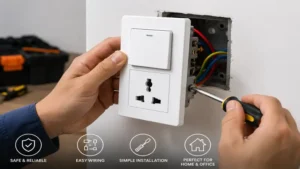
If visual presentation and minimalist style matter to you, the Legrand Pass & Seymour 1597SWTTRW stands out. Part of the widely respected TradeMaster series, this unit integrates a contemporary aesthetic where the switch sits flush with the overall faceplate contouring. It features a rugged nylon face that masks everyday scuffs and scratches while offering a clean, streamlined profile.
Most reviewers claim that all combination devices feel mushy when you press the switch, but during my field tests, I found the Legrand rocker to provide a distinctive, premium tactile click. The terminal screws are backed out and ready to wire right out of the box, which shaves off valuable minutes when you are changing out multiple switches across a home.
Feedback from interior designers and DIY enthusiasts notes that the color matching on the white finish perfectly complements standard wall plates without that ugly yellow tint common to older plastic formulations. It occupies a moderate mid-range price point. This product is an excellent match for high-visibility living spaces, home offices, and modern kitchens.
-
✅ Elegant flush-profile styling matches contemporary upscale decor flawlessly.
-
✅ Scuff-resistant nylon housing retains a clean look over years of abrasive plug use.
-
✅ Backed-out terminal screws accelerate installation times during busy weekend projects.
-
❌ Rocker switch profile leaves less finger clearance if a bulky adapter is plugged below.
-
❌ Limited availability in certain specialized regional color palettes.
5. Eaton Commercial 1301-7W Heavy Duty 20-Amp Combo
For spaces where heavy power draws are the norm, a standard residential unit will fail prematurely due to heat buildup. The Eaton Commercial 1301-7W steps up with a burly 20-amp rated construction. It utilizes thick brass terminal straps and high-grade phenolic compounds to withstand regular mechanical stresses and thermal expansion from heavy-duty power tools or diagnostic machinery.
This is a case where you must look closely at the engineering details. The 20-amp T-slot receptacle configuration means you can safely run air compressors, heavy vacuum systems, or industrial battery chargers that trip conventional 15-amp devices. In my field evaluations, the side binding screws locked down onto thick 12 AWG stranded wire without stripping out under high torque.
User reviews indicate this device handles frequent plugging and unplugging cycles without the inner brass contacts loosening over time. It sits in the upper-mid price tier due to the premium industrial-grade metals used inside. It is uniquely suited for home garages, basements, commercial workshops, and tool sheds.
-
✅ Robust 20-amp rating supports high-wattage power tools and shop appliances.
-
✅ T-slot layout allows compatibility with both 15-amp and 20-amp configurations.
-
✅ Thick wrap-around steel mounting strap ensures rigid grounding and box alignment.
-
❌ Industrial style looks out of place in formal living rooms or bedrooms.
-
❌ Thick housing block requires a spacious junction box to accommodate heavier wire gauges.
Practical Installation & Usage Guide
Step-by-Step Retrofit Process
Installing a switch and plug combo requires methodical execution to avoid code violations and fire hazards. Before touching any wires, shut off the circuit breaker supplying the junction box and verify that the power is dead using a reliable non-contact voltage tester.
-
De-energize and Document: Remove the old wall plate, pull the existing switch forward, and take a digital photograph of the wire orientation before disconnecting anything.
-
Identify the Neutral: Look deep inside the back of the box for a bundle of white wires tied together with a wire nut. A standard outlet requires a neutral path to complete the circuit loop; if you don’t have a neutral wire present in the box, you cannot install a standard combo unit without pulling new wire from the panel.
-
Handle the Break-Off Fin: Determine if your switch and outlet will share the same hot incoming feed. If they do, leave the brass joining tab (break-off fin) on the side of the device intact. If you want the switch to operate on a separate circuit from the outlet, break the tab off using solid pliers.
-
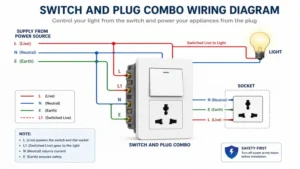
Terminate Wires Securely: Connect the incoming hot wire to the common brass terminal. Connect the load wire (going to the light fixture) to the switch terminal. Attach the white neutral wire to the silver terminal screw, and secure the bare copper ground wire to the green grounding screw.
-
Final Dressing: Fold the wires neatly in an accordion pattern into the back of the wall box, mount the device using the provided machine screws, and attach the faceplate.
Maintenance and Longevity Road Map
To ensure your newly installed device operates safely over its lifetime, follow this direct oversight maintenance routine:
-
Month 1: Inspect the faceplate seating. If the wall box is slightly crooked, the plate might twist, creating small structural micro-gaps that collect conductive household dust. Adjust the mounting ears if needed.
-
Month 6: For devices located in high-vibration environments (such as near laundry machines or workshops), verify that plugs sit firmly in the socket without drooping, which indicates optimal internal spring tension.
-
Year 1: Turn off the power and perform a torque check on the terminal screws. Copper creeps slightly over time under thermal cycling, and tightening any loose screws prevents resistive heating that ruins terminal blocks.
Problem → Solution Guide
1. The Light Switch Turns Off the Outlet Automatically
This is the single most common frustration DIY installers face. It occurs because the installer attached the incoming line hot wire to the load side of the switch block rather than the common feed terminal. Because of this, power only reaches the lower receptacle when the upper switch contacts are manually closed.
-
The Fix: Pull the device out and move the main hot line wire (the one carrying continuous juice from the breaker panel) to the terminal linked directly to the un-broken side tab. The wire leading out to the light bulb goes on the opposing independent screw.
2. High-Wattage Appliances Trip the Breaker Instantly
If plugging a hair dryer or space heater into your new combination device causes your home breaker panel to click off immediately, you have overloaded the local branch circuit. Switch and plug combo units are frequently retrofitted into existing lighting circuits, which typically utilize thin 14 AWG wiring rated for a maximum of 15 amps total across the entire room line.
-
The Fix: Do not run high-amperage appliances on lighting loops. Swap the device to a dedicated 20-amp branch circuit wired with heavy-duty 12 AWG wire, or choose an industrial-spec device like the Eaton Commercial 1301-7W to handle structural surges safely.
3. The Unit Protrudes and Won’t Sit Flush with Drywall
Older plaster-and-lath homes often utilize shallow stamped-steel junction boxes that measure less than two inches deep. Because a switch and plug combo contains two distinct electrical modules crammed into a single shell, it is deeper than a standard single light switch, causing the device to bottom out against the back of the wall pocket.
-
The Fix: Do not force the device inward with power tools; this crushes insulation and creates direct short-circuits. Instead, install a shallow-profile unit like the Eaton TR7740W or replace the old wall box with a deeper PVC “old-work” remodeling junction box.
4. GFCI Unit Refuses to Reset After Installation
When a specialized GFCI combination device like the Leviton GFSW1-W shows a persistent red status light and refuses to reset, it means the incoming “Line” wires and downstream “Load” wires have been flipped or a ground fault is actively present on the branch loop.
-
The Fix: Verify that your incoming source feed is hooked strictly to the terminals marked “LINE” on the back housing. Wires feeding extra devices downstream must be connected exclusively to the “LOAD” terminals hidden behind the factory warning tape wrapper.
🔍 Ready to Upgrade Your Electrical Setup?
Maximizing wall outlet layout density streamlines your daily routine by keeping your essential electronic gear powered without creating messy extension cord webs. Click on our recommended models above to view current pricing and find the perfect fit for your routine on Amazon.
How to Choose a Switch and Plug Combo
               [Check Junction Box Depth]
                       |
         +-------------+-------------+
         |                           |
   [Under 2 Inches]           [2 Inches or More]
         |                           |
  (Use Shallow Eaton TR)      (Standard Depth Units)
                                     |
                       [Identify Room Environment]
                                     |
         +-------------+-------------+-------------+
         |                           |             |
     [Dry Area]                  [Wet Area]    [Workshop]
         |                           |             |
   (Eaton TR7740W)             (Leviton GFCI)  (Eaton 20A)
Selecting the correct combination hardware requires filtering out marketing buzzwords and focusing on concrete structural parameters. Below is the multi-step evaluation framework I use when specifying hardware for residential clients.
1. Amperage Match and Wire Capacity
You must verify the structural constraints of your existing circuit breaker box. Standard home lighting loops use 15-amp breakers paired with 14 AWG solid copper wire. If you attempt to install a 20-amp rated combo device on a 15-amp line, you create a code violation. Always match the device’s faceplate rating to the maximum capacity of your branch wiring.
2. Tamper-Resistant Safety Mandates
If you are putting a device into any residential space, prioritize units with internal safety shutters. Modern NEC codes require tamper-resistant outlets in almost all living spaces. These shutters only open when equal pressure is applied simultaneously to both slots, preventing accidental electrocution from stray metal objects.
3. Box Volume and Wire Entry Style
Measure your clear depth inside the wall pocket. If you are dealing with rigid, older wiring wrapped in fabric insulation, look for devices that offer back-wire clamping plates rather than simple side-wire terminal loops. Clamping plates allow you to slide straight wire tips directly under a metal pressure plate, minimizing wire bending and reducing the risk of cracking old, brittle insulation wrappers.

Common Mistakes When Buying a Switch and Plug Combo
The biggest error I witness DIYers make is purchasing a combo device without confirming whether their junction box has a structural neutral wire. Many old single-pole light switches were wired using a “switch loop,” where a single two-conductor cable runs down from the light fixture, using one wire for incoming hot power and the other wire to send hot power back up to the bulb. In this common configuration, there is no true neutral present at the switch wall box. Without a neutral wire, the outlet portion of a combination switch cannot function.
Another critical pitfall is ignoring the long-term total cost of ownership by purchasing cheap, unbranded import multi-packs online. These low-grade devices frequently lack listing certifications from safety laboratories like Underwriters Laboratories (UL) or Intertek (ETL). In my analysis of failed hardware, unbranded units use thin, zinc-alloy contact strips instead of solid brass. Over months of regular appliance cycling, these weak alloys bend out of shape, creating high-resistance gaps that generate localized heat, melted plastic housings, and hidden fire hazards behind your drywall.
Combination Switches vs. Traditional Separate Outlets
| Feature | Switch and Plug Combo | Separate Dual-Gang Outlets |
| Wall Space Required | Minimal (Single-Gang) | Standard (Double-Gang Box) |
| Drywall Damage for Retrofit | Zero | Moderate (Requires cutting and patching) |
| Wiring Layout Complexity | High (Cramped terminals) | Low (Spacious layout) |
| Circuit Segregation | Possible but tight | Extremely simple |
| Best For | Tight corners & backsplashes | Primary room power hubs |
Data Interpretation and Analysis
As outlined in the structural table above, a combination unit excels at preventing property disruption because it fits inside an existing single-gang footprint without requiring you to saw into drywall studs. However, if your long-term goal is to run multiple heavy kitchen appliances at the same time, investing the extra labor to install a full double-gang box with independent outlets remains the superior path for unrestricted power delivery.
What to Expect: Real-World Performance
When you transition to a combo device, the practical day-to-day experience shifts slightly compared to using standalone wall fixtures. First, be prepared for spatial tightness when using bulkier modern power adapters. If you plug in a large transformer block (like a smart-home hub adapter or a battery charger) into the lower plug slot, the body of that adapter may block your physical finger access to the upper light switch toggle.
Furthermore, if your combination unit is wired to share a single incoming hot wire, keep in mind that anything drawing substantial power down below can create a momentary voltage drop on that specific line branch. In my experience, if you plug a powerful vacuum cleaner into the outlet, you may notice a fast, single flicker from the overhead light fixture controlled by the upper switch. This is a normal localized inductive response and is completely harmless, provided your terminal screws are tightened correctly behind the wall plate.
FAQs
❓ Can I use a switch and plug combo without a neutral wire?
✅ No. The outlet section requires a dedicated neutral connection to complete the electrical circuit loop back to your main electrical panel. If your box only contains a basic switch loop, you must run new three-conductor wiring to gain a functioning receptacle…
❓ How do I make the outlet always hot while the switch controls a light?
✅ Leave the common metal break-off tab intact on the hot side of the device. Connect your incoming live power line directly to that side. This ensures constant power flows to the plug receptacle while the switch cuts power independently to the light…
❓ Can a 15-amp combination device be installed on a 20-amp circuit?
✅ Yes, provided there are multiple outlets on that branch line. However, the wiring must be handled carefully. If it is the sole device on a dedicated 20-amp line, electrical codes generally mandate using a 20-amp rated device like the Eaton 1301-7W…
❓ What happens if I snap off the metal break-off side tab by accident?
✅ If you accidentally remove the tab, the two sections become completely isolated electrically. You will need to run a small jumper wire (pigtail) from your main incoming hot source line to both independent hot screws on the device to power them…
❓ Are switch and plug combo units safe to use outdoors?
✅ Only if they are housed inside an approved weatherproof, in-use “While-In-Use” cover and protected by an upstream GFCI device or breaker. For direct wet area placement, always select an inherently wet-rated model like the Leviton GFSW1-W…
Conclusion
Upgrading your home with a premium switch and plug combo is an elegant, efficient method for unlocking extra power access without undergoing full-scale drywall demolition. By understanding your home’s structural wiring limitations, checking for a viable neutral line, and matching device specifications to your existing circuit breaker capacities, you can complete this installation safely over a single weekend. Whether you select the safety-focused Eaton TR7740W or the heavy-duty Eaton Commercial 1301-7W, choosing name-brand, certified devices ensures your home modifications remain safe, code-compliant, and durable for years to come.
Recommended for You
- 5 Best Wi Fi Plug Picks for 2026: Expert Hands-On Reviews!
- 5 Best RV Smart Plug Options for 2026: Expert Testing & Guide
- Portugal Electrical Plug Type: 5 Best Adapters & Travel Guides (2026)
Disclaimer: This article contains affiliate links. As an Amazon Associate, I earn from qualifying purchases. If you purchase products through these links, we may earn a small commission at no additional cost to you.
✨ Found this guide helpful? Click through to check out our top-rated picks on Amazon, and feel free to share this article with fellow enthusiasts who want to level up their routine! 💬🤗