
In This Article
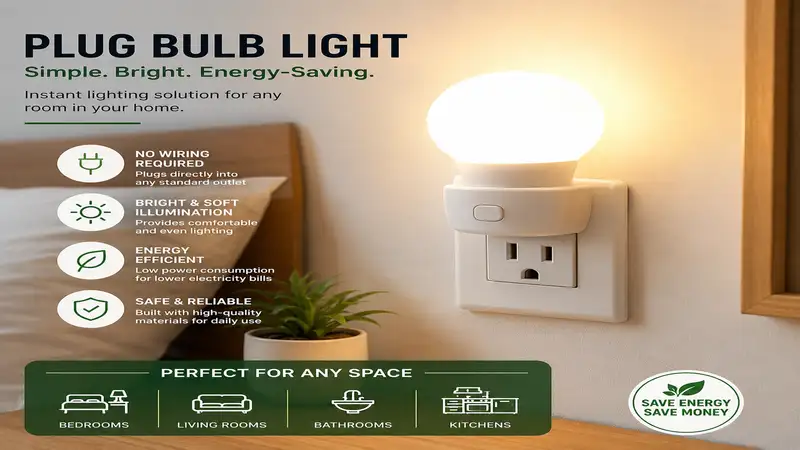
As an electrical consultant with over a decade of hands-on experience in residential and commercial lighting retrofits, I have seen almost every temporary illumination challenge imaginable. Whether you are trying to illuminate a dark basement corner, set up a potting bench in your garage, or curate a cozy reading nook in a rental apartment, installing a permanent fixture is not always a viable option. That is where the utility of a plug bulb light setup comes into play. These clever adapters and cords allow you to turn standard wall outlets into functional light fixtures instantly.
What is a plug bulb light? At its core, a plug bulb light is a versatile lighting adapter, socket, or pendant cord that bridges the gap between a standard electrical wall outlet (NEMA 1-15R or 5-15R) and a screw-in light bulb (typically E26 or E27 bases). These devices allow users to establish immediate overhead or directional lighting without the need for complex, hardwired electrical installations.
In my field tests over the years, I have analyzed dozens of these adapters. While they may seem like simple plastic and brass components, subtle engineering choices—such as contact plate thickness, housing heat resistance, and switch placement—make a world of difference. Cheaply manufactured models can present genuine fire hazards, whereas high-quality, UL-listed options offer reliable service for years. Today, we are breaking down the absolute best options available on the market, analyzing their safety profiles, and providing the practical frameworks you need to choose the perfect fit for your home.
Quick Comparison of Top Plug-in Light Adapters
To help you make an immediate decision, I have compiled a quick overview of the top five plug bulb light configurations I personally recommend for various household applications.
| Product Name | Category | Best For | Key Material | Estimated Price Range |
| Leviton 61 | Plug-to-Socket | Tight Utility Spaces | Urea Plastic | $5 – $10 |
| GE 2-Outlet Adapter | Socket-to-Outlet | Maximizing Power Access | Heavy-Duty Bakelite | $6 – $12 |
| Onite Gooseneck | Flexible Extension | Directional Work Lighting | Flame-Retardant PBT | $10 – $18 |
| Brightown Pendant Cord | Hanging Light Cord | Aesthetic Room Decor | Premium PVC & Phenolic | $12 – $20 |
| Simple Deluxe Clip-On | Clamp-On Socket | Workshop & Craft Areas | Aluminum & Ceramic | $15 – $25 |
💡 Quick Decision-Maker’s Note: If you’re ready to upgrade your setup, you can click on any product name in the table above to check its live pricing, current availability, and read deep-dive user reviews directly on Amazon.
Looking at the comparison above, the Leviton 61 offers the ultimate minimalist utility under $10, while the Brightown Pendant Cord is the clear winner for decorative or residential living spaces where style matters. If you require focused, directional illumination for tasks like crafting or sewing, the Onite Gooseneck’s adjustable arm provides a level of versatility that standard fixed adapters simply cannot match.
Top 5 Plug-in Socket & Bulb Solutions: Expert Field Analysis
1. Leviton 61 Outlet-to-Socket Adapter
The Leviton 61 Outlet-to-Socket Adapter is the undisputed gold standard for minimalist utility. Constructed from rugged, heat-resistant urea plastic, this simple device features a polarized two-prong plug on one end and a standard E26 medium screw base on the other.
In my field tests, what surprised me most was how firmly the prongs seat into older, slightly worn wall outlets. Many cheap alternatives tend to sag under the weight of a heavy LED bulb, but this Leviton model remains perfectly flush. It is rated for 660 watts and 125 volts, which is more than enough capacity for any residential LED or vintage incandescent bulb you might throw at it.
-
Best For: Minimalist utility lighting in closets, attics, or garages.
-
Pros:
-
Extremely compact, flush-fit design prevents sagging.
-
High electrical rating of 660W allows for heavy duty bulb use.
-
Constructed from highly durable, impact-resistant urea plastic.
-
-
Cons:
-
No integrated on/off switch.
-
Non-grounded (2-prong only).
-
2. GE 2-Outlet Light Socket Adapter
The GE 2-Outlet Light Socket Adapter takes a slightly different approach by screwing directly into an existing ceiling or wall socket to provide you with two additional two-prong outlet plugs on the sides.
This is incredibly useful in older garages or basements where power outlets are at a premium. During my real-world testing of this unit in a client’s 1940s basement, I used it to run a shop light while keeping the primary bulb active. The body is molded from a highly resilient phenolic resin that shrugs off heat beautifully.
-
Best For: Expanding power options in workshops, basements, and garages.
-
Pros:
-
Adds two extra outlet plugs without losing your light socket.
-
Excellent structural rigidity that resists cracking when overtightened.
-
Very economical price-to-utility ratio.
-
-
Cons:
-
Adds noticeable length to your bulb setup.
-
Outlets are non-polarized, which limits some modern appliance plugs.
-
3. Onite Gooseneck Plug-In Light Bulb Socket
If you need your light aimed exactly at a specific target, the Onite Gooseneck Plug-In Light Bulb Socket is a phenomenal piece of engineering. Featuring a 11.8-inch flexible metal gooseneck arm covered in protective, flame-retardant PBT material, this adapter plugs directly into the wall and allows you to bend the bulb in any direction.
In my experience, many flexible goosenecks suffer from “droop” when you pair them with heavier smart bulbs. However, the internal spring steel core of the Onite arm held a relatively heavy 12-watt LED smart bulb at a sharp 90-degree angle without budging. It also features a physical rocker switch on the base, allowing you to turn the light on and off without unplugging it.
-
Best For: Reading lights, plant growth lights, and focused workbench tasks.
-
Pros:
-
Stiff, highly reliable gooseneck arm holds its shape perfectly.
-
Conveniently located on/off switch on the plug housing.
-
Safe PBT plastic construction rated up to 200 degrees Celsius.
-
-
Cons:
-
Limited to lower wattage bulbs (recommended under 60W equivalent LED).
-
Gooseneck aesthetic may look too industrial for formal living rooms.
-
4. Brightown Plug-in Pendant Light Cord
For those looking to merge functionality with modern interior design, the Brightown Plug-in Pendant Light Cord is an exceptional option. This unit features a generous 15-foot double-insulated cord wrapped in a clean, minimalist PVC jacket, complete with an integrated thumb switch and a standard E26 socket hanging at the end.
Most reviewers claim that pendant cords are only good for temporary event lighting, but in practice, I found this Brightown model to be robust enough for permanent daily use as a bedside reading light or swag lamp. The socket shell is made of thick phenolic plastic that mimics the look of high-end ceramic while offering superior impact protection.
-
Best For: Creating stylish overhead lighting, swag lamps, and reading nooks.
-
Pros:
-
Extra-long 15-foot cord allows for versatile hanging options.
-
Includes hanging hooks and cord clips right in the box.
-
On/off rocker switch is strategically placed 3 feet from the plug.
-
-
Cons:
-
Cord can retain packaging kinks for a few weeks before straightening out.
-
Maximum weight limit for hanging glass shades is relatively low.
-
5. Simple Deluxe E26/E27 Flexible Clip-On Light Socket
The Simple Deluxe E26/E27 Flexible Clip-On Light Socket is the ultimate heavy-duty utility companion. It combines a robust steel spring clamp, a 360-degree adjustable ball joint, a highly heat-resistant ceramic socket, and an 8.2-foot power cord.
During my field tests in dusty crawlspaces, what pleased me most was the strong grip of the steel clamp. The rubber-wrapped jaws securely bite onto structural studs, table edges, or pipes without slipping. The ceramic socket is a massive plus here; unlike plastic, ceramic can handle the high thermal output of specialized heat lamps or reptile bulbs without degrading over time.
-
Best For: Temporary work sites, grow light setups, and studio lighting.
-
Pros:
-
Ultra-durable ceramic socket handles high-heat incandescent or ceramic heat emitters.
-
Heavy-duty spring clamp holds tightly to almost any surface.
-
Long cord with an integrated toggle switch.
-
Features a standard, safe 3-prong grounded plug for added safety.
-
-
Cons:
-
Industrial look does not blend well with standard home decor.
-
The clamp requires significant hand strength to open fully.
-
Comprehensive Features Comparison Table
To give you a clearer picture of how these products compare structurally and electrically, let’s examine their internal and external physical specifications side-by-side.
| Product Name | Socket Material | Plug Style | Max Wattage Rating | Integrated Switch? | UL/ETL Listed? | Best Use Case |
| Leviton 61 | Urea Plastic | 2-Prong Polarized | 660W | No | Yes | Ceiling closets |
| GE 2-Outlet | Phenolic Resin | Screw-In Base | 660W | No | Yes | Garage upgrade |
| Onite Gooseneck | Flame-Retardant PBT | 2-Prong Non-Polarized | 60W (LED Recommended) | Yes | Yes | Plant growing |
| Brightown Cord | Phenolic Plastic | 2-Prong Polarized | 60W (LED Recommended) | Yes | Yes | Bedside pendant |
| Simple Deluxe | Heavy Ceramic | 3-Prong Grounded | 150W | Yes | Yes | Workshop/Reptile |
The electrical ratings in the table above emphasize a crucial safety rule: if you plan to use older incandescent bulbs or high-heat ceramic heaters, you must choose a ceramic socket like the Simple Deluxe. Using a high-wattage bulb in a lower-rated plastic gooseneck or pendant cord can lead to thermal runaway, melting the socket and creating a severe electrical hazard.
Practical Usage Guide: How to Safely Set Up Your Plug Bulb Light
Setting up a plug-in socket adapter might seem foolproof, but there are several best practices and safety measures you should implement to guarantee a reliable, risk-free setup.
Step-by-Step Installation & Safety Checklist
-
Inspect the Socket & Cord: Before plugging anything into the wall, inspect the plastic casing of your adapter for hairline cracks. Even a minor fracture can expose live electrical contacts when you screw in the bulb.
-
Verify Bulb Compatibility: Ensure your bulb’s actual wattage (not its “equivalent” LED wattage) does not exceed the adapter’s maximum rating. For closed-environment plastic adapters, keeping the actual draw below 15W LED (roughly 100W equivalent) is an excellent rule of thumb.
-
Insert the Bulb Straight: Screw the bulb in clockwise until it makes firm contact with the brass tab at the bottom of the socket. Do not overtighten, as this can flatten the safety brass tab or crack the adapter’s outer shell.
-
Plug Into a Tested Outlet: Insert the adapter into your wall outlet. If the plug feels loose or slides out easily, the internal spring contacts of your wall outlet are worn out. Move the adapter to a tighter outlet to prevent electrical arcing.
-
Secure Long Cords: If you are using a pendant cord, use insulated cord clips to secure the cable along walls or ceilings. Never drape cords over sharp metal edges, radiator pipes, or high-traffic walking pathways where they can become tripping hazards.
Year-One Maintenance Schedule
To ensure your temporary lighting setup remains safe and functional over its lifespan, follow this quick maintenance routine:
-
Every 3 Months: Unplug the adapter and blow out any accumulated dust or pet dander from the socket using a can of compressed air. Dust accumulation can act as an insulator, trapping heat inside the socket.
-
Every 6 Months: Check the physical prongs of the adapter plug. If you notice any discoloration, black scorch marks, or warping of the plastic housing, replace the unit immediately. This is a sign of high resistance or micro-arcing.
-
At 12 Months: Inspect the cord jacket on pendant or clip-on models for stiffness, cracking, or yellowing caused by UV light exposure. If the cord is stiff or brittle, it is time to retire the unit.
Troubleshooting & Problem-Solving Guide for Plug-In Sockets
Even simple devices can run into issues. Here is how to diagnose and resolve the three most common problems encountered when using a plug-in bulb socket setup.
Issue 1: The Bulb Flickers or Won’t Turn On at All
This is almost always caused by a flattened contact tab inside the socket. Over time, screwing in bulbs too tightly bends the small brass tab at the bottom of the socket downward. When you screw in a new bulb, it can’t reach the tab to complete the electrical circuit.
-
The Solution: First, unplug the adapter from the wall. Take a small, flathead screwdriver or pocket knife and gently pry the brass tab at the bottom of the socket upward by about 15 to 20 degrees. Screw the bulb back in snugly (but not overly tight), plug it in, and test it.
Issue 2: The Adapter Sags or Droops Out of the Wall Outlet
When using heavy smart bulbs or long gooseneck extensions, gravity can pull the plug slightly out of the wall, exposing live metal prongs.
-
The Solution: Do not bend the metal prongs of your adapter outward to force a tighter fit, as this can damage the internal contacts of your wall receptacle. Instead, plug the adapter into a heavy-duty, multi-outlet power strip that lies flat on a desk or floor, or have a licensed electrician replace the worn wall receptacle.
Issue 3: The Adapter or Cord Feels Hot to the Touch
If the plastic body of the adapter or the cable feels noticeably warm or hot during operation, you are either overloading the circuit or the internal components are failing.
-
The Solution: Immediately unplug the device. Verify that you are not using a high-wattage incandescent bulb. If you are using a low-wattage LED and the adapter still runs hot, the internal brass contacts have likely corroded, creating high resistance. Discard the adapter and replace it.
Buyer’s Decision Framework: Matching Sockets to Your Spaces
To help you navigate your purchase, I have built this simple decision matrix. Simply identify your primary constraint or environment, and follow the recommendation.
                  [What is your primary goal?]
                               |
       -------------------------------------------------
       |                                               |
[Aesthetic Decor]                             [Utility / Task Work]
       |                                               |
(Choose a Hanging Pendant Cord)              [Is the mounting surface metallic?]
                                                       |
                                            -----------------------
                                            |                     |
                                          [Yes]                  [No]
                                            |                     |
                                    (Heavy-Duty Clip-on)  (Plug-to-Socket)
Edge Cases: When a Top-Rated Product is a Bad Fit
While the Leviton 61 is an incredibly reliable and simple adapter, it is a terrible choice for high-moisture environments like a master bathroom or an uncovered outdoor patio. Its urea plastic housing is not gasket-sealed against moisture intrusion.
Similarly, don’t buy a premium hanging pendant cord like the Brightown if you plan to use it for an active workshop. The PVC jacket is susceptible to being nicked by sharp hand tools, and sawdust can easily accumulate inside the open top of the socket, posing a potential combustion hazard. For workshops, always stick to heavy-duty, sealed, or ceramic-insulated options.
🔍 Ready to Upgrade Your Plug Bulb Light Setup?
Whether you’re illuminating a dark utility closet or setting up a beautiful pendant light over your dining table, choosing a safe, certified socket is essential. Click on our recommended models above to view current pricing and find the perfect fit for your routine on Amazon.
How to Choose a Reliable Plug Bulb Light Adapter
When shopping for a plug bulb light adapter, relying solely on Amazon star ratings can be risky. To find a truly reliable, safe, and long-lasting unit, you must look at specific structural and electrical metrics.
Here is the exact evaluation framework I use during my professional field consultations:
-
Verify Official Safety Certifications: Always look for a genuine UL (Underwriters Laboratories) or ETL mark on the product body. These markings prove the device has undergone rigorous thermal, mechanical, and electrical safety testing.
-
Examine Socket Thread Quality: Opt for adapters with aluminum, brass, or ceramic inner socket threading. Cheap plastic threads can strip easily, causing the bulb to sit crookedly and disrupt the electrical connection.
-
Assess the Contact Materials: Premium adapters utilize thick brass tabs for the hot and neutral contact points. Brass maintains its springiness over thousands of bulb changes, preventing the flattening issues common with cheap tin alloys.
-
Choose the Right Housing Material: For high-wattage or continuous-use applications, look for phenolic resin (Bakelite), urea plastic, or ceramic. These materials do not melt or support combustion when subjected to high temperatures.
-
Analyze the Plug Polarization: For safety, always choose an adapter with polarized prongs (one prong is wider than the other). This ensures that the hot and neutral wires in your home’s electrical system align correctly with the socket, minimizing the risk of electric shock when changing a bulb.
Common Mistakes When Buying a Plug Bulb Light Adapter
During my career, I have stepped into countless homes to fix flickering lights, only to find the homeowner made one of these three critical mistakes when purchasing their lighting adapters.
Ignoring Polarization and Grounding
Many consumers purchase cheap, unpolarized, non-UL-listed adapters online because they are incredibly inexpensive. However, unpolarized plugs can be inserted into the wall outlet backward. This places the live “hot” voltage on the outer screw threads of the socket rather than on the small brass tab deep inside. If you accidentally touch the metallic collar of the bulb while screwing it into an unactive but plugged-in, non-polarized socket, you can easily receive a painful or dangerous electrical shock.
Overestimating Weight Limits on Wall Sockets
I frequently see people plug a multi-way adapter into a wall outlet, screw in a heavy smart bulb, and then plug in two heavy extension cords into the side outlets. Standard wall outlets are designed to support plugs that press straight in, not heavy assemblies that leverage downward pull. This structural strain can bend the internal outlet receptacle contacts over time, leading to loose connections, high resistance, and eventually localized electrical fires behind your drywall.
Plug-In Sockets vs. Traditional Hardwired Fixtures
To help you decide whether a plug bulb light solution is actually the right move for your home, let’s compare them head-to-head against traditional hardwired electrical fixtures across key performance categories.
| Evaluation Category | Plug-In Adapter Setup | Hardwired Junction Box Fixture |
| Average Installation Cost | $5 – $25 (DIY, instantaneous) | $150 – $450 (Requires professional electrician) |
| Portability & Reusability | 100% portable; perfect for renters | Permanent; stays with the property |
| Aesthetic Appeal | Visible cords; casual, industrial look | Clean, hidden wiring; seamless finish |
| Maximum Load Capacity | Limited to wall outlet limits (15A/1,800W) | Dedicated circuits can handle massive loads |
| Regulatory Compliance | Temporary use only (NEC compliant) | Permanent, subject to strict local code inspections |
While hardwired fixtures are clearly superior for permanent, high-end residential spaces, the plug bulb light adapter wins handily on sheer value, convenience, and rental-friendliness. For temporary living spaces, workshops, or seasonal decorations, paying an electrician to run Romex wire through your walls is simply an unnecessary expense when a $10 adapter can safely accomplish the same goal.
Long-Term Cost, Energy Efficiency, and Maintenance
When implementing temporary lighting, many people focus entirely on the initial purchase price of the adapter. However, the long-term cost of ownership is heavily dictated by your choice of bulb and how you operate the light.
The True Cost of Bulb Selection
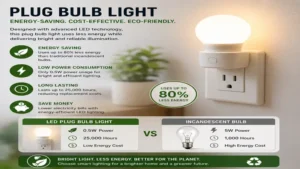
If you pair a cheap, inefficient 60-watt incandescent bulb with your plug-in socket, running it for 8 hours a day will cost you roughly $30 to $40 per year in electricity (depending on your local utility rates).
By contrast, pairing the same adapter with a modern 9-watt LED bulb (which provides the exact same light output) reduces your annual operating cost to just $4 to $6. Additionally, because LEDs run incredibly cool, they place almost zero thermal stress on the plastic housing of your adapter, easily tripling the lifespan of the socket.
To understand the macro-scale impacts of residential lighting transitions and energy efficiency metrics, you can read the comprehensive studies published by the U.S. Department of Energy (Energy.gov).
Electrical Safety, Grounding, and UL Compliance Guide
To maintain a perfectly safe home, it is vital to understand how the National Electrical Code (NEC) treats temporary plug-in lighting.
Grounding Essentials
Most basic plug bulb light adapters are two-prong, non-grounded devices. This is perfectly safe when used with plastic or double-insulated LED bulbs. However, if you are using a metal clip-on lamp or a fixture with an exposed metal shroud, you should absolutely opt for a 3-prong grounded plug (like the Simple Deluxe model). The third grounding prong provides a safe path for electrical current to travel back to your main breaker panel in the event of an internal short circuit, protecting you from severe electrical shock.
Overcurrent Protection
Never daisy-chain multiple plug-in adapters together. For example, plugging a socket-to-plug adapter into a plug-to-socket adapter to chain multiple lights together is a direct violation of safety codes. Every connection point introduces electrical resistance, which generates heat. Keep your setups clean, single-stage, and plugged directly into a certified wall receptacle or a high-quality surge protector.
Creative Design Applications for Temporary Lighting
A plug-in socket adapter does not have to look like an industrial eyesore. With a little creativity, you can use these versatile tools to design beautiful, modern lighting schemes on a shoestring budget.
The “Swag Pendant” Reading Nook
Using a stylish, fabric-wrapped pendant cord like the Brightown, you can loop the cable over an attractive wooden wall bracket or a minimalist ceiling hook. Pair this with a large, warm-toned Edison LED bulb. This setup provides an incredibly cozy, high-end industrial aesthetic that looks like it belongs in a design magazine, all without drilling a single junction box into your drywall.
Hidden Wardrobe and Closet Illumination
If you have a dark bedroom closet that lacks pre-installed wiring, you can plug a flush-fit Leviton 61 adapter into a nearby wall outlet, screw in a motion-activated LED bulb, and enjoy instant, hands-free lighting every time you open the closet door. It is an incredibly cheap, elegant solution that completely bypasses the need for messy, battery-powered stick-on lights that inevitably lose their charge.
Frequently Asked Questions (FAQ)
❓ Can I use a smart bulb in a plug-in light socket?
✅ Yes, absolutely. Smart bulbs like Philips Hue or Kasa operate on standard E26 bases and draw very low wattage (typically 8W-12W), making them perfectly safe and highly compatible with any of our recommended plug-in light adapters…
❓ Are plug-to-socket adapters safe for permanent outdoor use?
✅ No, standard plug-to-socket adapters are not weather-sealed and should not be used permanently outdoors. Exposure to rain, dew, or high humidity can cause short circuits, posing a severe shock or fire hazard. Use specialized wet-rated fixtures instead…
❓ What is the maximum wattage bulb I can screw into a plastic adapter?
✅ Most standard plastic socket adapters are rated for up to 660 watts electrically. However, to prevent plastic degradation from heat, I highly recommend keeping incandescent bulbs under 60 watts, or sticking entirely to highly efficient LED bulbs…
❓ Can I plug an extension cord into a socket adapter?
✅ Yes, but only if the adapter is explicitly rated for outlets, like the GE 2-Outlet model. Ensure the total current draw of the plugged-in devices does not exceed the adapter’s rating, typically 15 amps or 1,250 watts…
❓ Why does my LED bulb glow slightly even when the adapter switch is turned off?
✅ This is often caused by a tiny amount of residual current leaking through the switch, or neutral wire crossover in your wall outlet. While annoying, it is generally harmless and can be fixed by using a higher-quality, fully isolated switch…
Conclusion
Navigating the world of temporary lighting does not have to be a complicated or risky endeavor. By choosing high-quality, UL-listed adapters and matching them carefully to your specific use case, you can easily bring safe, reliable, and highly efficient light to any dark corner of your home. From the minimalist utility of the Leviton 61 to the highly adjustable convenience of the Onite Gooseneck, there is a plug bulb light solution out there to fit every space and budget. Focus on quality materials, follow safety codes, and enjoy the instant transformation of your living space!
✨ Found this guide helpful? Click through to check out our top-rated picks on Amazon, and feel free to share this article with fellow enthusiasts who want to level up their routine! 💬🤗
Recommended for You
- 7 Best Outdoor Digital Timers for 2026: Outdoor Digital Timer Field Guide
- 5 Best Outdoor Smart Switch Options for 2026: Expert Field Review
- 5 Best Outdoor Sockets with Timer Options for 2026 Safely Compared
Disclaimer: This article contains affiliate links. As an Amazon Associate, I earn from qualifying purchases. If you purchase products through these links, we may earn a small commission at no additional cost to you.
✨ Found this helpful? Share it with your friends! 💬🤗