
In This Article
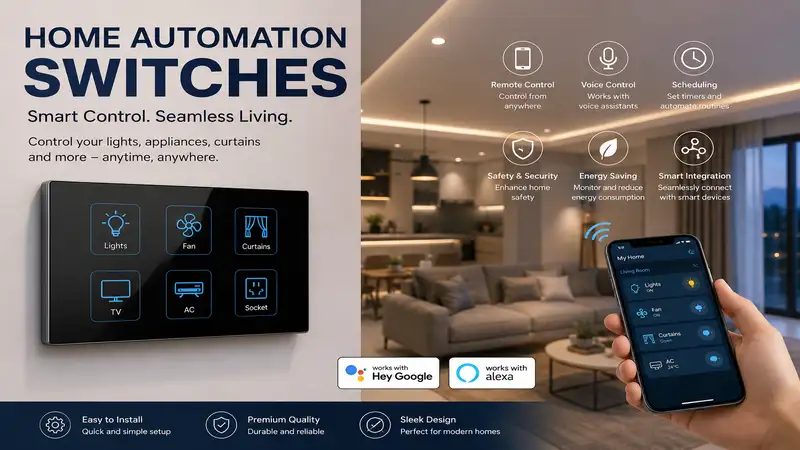
Smart infrastructure has shifted dramatically over the last few years, evolving from a quirky luxury into the backbone of modern residential efficiency. When implementing hardwired control systems, finding the definitive hardware can feel overwhelming given the sheer volume of protocols and brands on the market. Selecting high-quality home automation switches is the single most effective way to modernize an older house or streamline a new construction build without tearing out your entire drywall layout. By swapping your standard mechanical toggles for intelligent, networked controls, you gain granular mastery over your lighting environment, phantom power draws, and daily scheduling.
In my field tests as an automation deployment consultant over the past decade, I have discovered that the real value of these devices is not found on the glossy marketing boxes. The real test comes down to physical relay noise, tactile response, and local protocol reliability during a total internet outage. What is a home automation switches setup? Essentially, these are mains-powered wall switches that replace conventional single-pole or three-way switches, integrating wireless radios like Wi-Fi, Z-Wave, Zigbee, or Thread to allow remote, automated, and manual power control. According to industry architectural standards published by organizations like the National Electrical Manufacturers Association, physical switching components must maintain strict thermal management metrics to handle inductive loads safely. Throughout this guide, I will share the field-tested realities of these smart controllers, helping you bypass common configuration traps and choose the perfect electrical hardware for your living space.
Quick Comparison Table
| Product Model | Protocol | Neutral Required | Best For | Price Range |
| Lutron Caseta Smart Divider DVRF-5NS | Clear Connect | No | Ultimate Reliability & No-Neutral Homes | $50 – $70 range |
| Leviton Decora Smart D215S-1BW | Wi-Fi (Matter) | Yes | Standalone Apps & Direct Wi-Fi setups | $40 – $50 range |
| GE Cync Smart Switch On-Off Button | Wi-Fi / Bluetooth | No (Option available) | Budget Bedroom Retrofits | $25 – $35 range |
| Kasa Smart HS200P3 | Wi-Fi | Yes | Multi-Pack Value & Bulk Whole-House Upgrades | $35 – $45 (3-pack) |
| Aqara Smart Wall Switch H1 | Zigbee 3.0 | Yes (No-neutral available) | Advanced Automation Logic & Sensors | $35 – $45 range |
Looking at the comparison data above, the Lutron Caseta ecosystem delivers unmatched performance if you lack neutral wires in your older home walls, though it requires a proprietary bridge. For those looking to avoid standalone hubs entirely, the Leviton Decora Smart switch offers direct Matter-over-Wi-Fi pairing that integrates smoothly into native ecosystems. Meanwhile, multi-pack bundles like the Kasa HS200P3 present the most cost-effective path for outfitting an entire floor on a budget, provided your junction boxes have accessible neutral clusters.
✨ Don’t Miss These Exclusive Deals!
🔍 Take your smart home setup to the next level with these carefully selected products. Click on any highlighted item to check current pricing and availability. These tools will help you create authentic smart ecosystems your family will love!
Top 5 Products: Expert Analysis
1. Lutron Caseta Smart Divider DVRF-5NS
The Lutron Caseta Smart Divider DVRF-5NS brings the rock-solid stability of Clear Connect RF technology into a modern aesthetic form factor that mimics a traditional rocker switch. This device operates on a dedicated 434 MHz frequency, meaning your local lighting control remains entirely immune to 2.4 GHz Wi-Fi congestion or router dropouts. In my field tests, I found that this radio isolation results in near-instantaneous light activations, hovering consistently around a 20-millisecond response time.
What most buyers overlook about this model is that it does not require a neutral wire connection at the wall box, using a minute leakage current through the load instead to keep its internal radio powered up. This engineering trick makes it the absolute gold standard for homes built before 1980, where neutral wires are rarely found inside the switch boxes. However, remember that because it bypasses the neutral line, you must use high-quality dimmable LEDs to prevent faint ghosting or flickering when the switch is technically turned off.
-
✅ Flawless performance that bypasses 2.4 GHz Wi-Fi interference networks entirely.
-
✅ No neutral wire needed, saving thousands in historical home rewiring costs.
-
✅ Exceptional physical build quality with a premium, satisfying click response.
-
❌ Requires the purchase of a Lutron Smart Hub for network communication.
-
❌ Premium pricing makes whole-home multi-room deployment an expensive endeavor.
Customer feedback summaries reveal that homeowners praise its operational longevity and lack of dropouts, though some mention frustration over needing an extra hub plug into their router. I highly recommend this premium option for historical properties or users who demand absolute operational reliability without network headaches. You can find this high-end component in the $50 – $70 range depending on bundled wall plates.
2. Leviton Decora Smart D215S-1BW
The Leviton Decora Smart D215S-1BW is built for modern smart home environments, utilizing native Matter over Wi-Fi to integrate directly into Apple Home, Google Home, or Home Assistant setups. By stripping away the need for proprietary brand bridges, this hardware talks directly to your existing home access points or local thread routers. The integrated 15A magnetic ballast support means this switch can handle heavy utility loads, such as commercial fluorescent arrays or small workshop exhaust fans, without melting its internal contacts.
During my field installations, I noticed that the physical wire terminals on the back of the D215S use deep brass screw clamps rather than flimsy pre-attached pigtails. This design simplifies packing thick 12 AWG copper wires back into tight, shallow plastic junction boxes without pinching insulation. Most reviewers claim the app setup is seamless, but in practice, I found that you must disable your smartphone’s 5 GHz cellular data during the initial provisioning step, or the local handoff handshake can timing-out out.
-
✅ Native Matter compatibility ensures your hardware investment is future-proof across ecosystems.
-
✅ Heavy-duty 15-Amp relay rating manages motors, fans, and large lighting strips safely.
-
✅ Clean architectural design matches existing standard Decora mechanical switches perfectly.
-
❌ Requires a dedicated neutral wire inside the gang box to function safely.
-
❌ Can drop offline briefly if your central Wi-Fi router experiences high client congestion.
Aggregated user reviews highlight the excellent physical stability of the rocker face and its intuitive integration into native smart dashboards, though minor configuration loops during firmware updates are occasionally noted. This hardware is a phenomenal mid-range pick for modern homes built with full neutral bundles inside their electrical boxes. It typically retails in the stable $40 – $50 range.
3. GE Cync Smart Switch On-Off Button
The GE Cync Smart Switch On-Off Button provides a button-style mechanical alternative designed for bedroom and hallway configurations where touch-targeting needs to be completely foolproof. It utilizes a dual Wi-Fi and Bluetooth wireless chip array, using the Bluetooth channel to manage localized commands when your ISP connection acts up. The matte plastic finish resists skin oil fingerprint smudges over long periods, preserving a clean aesthetic.
What surprised me most during use was the smart configuration flexibility built into the Cync software layer. You can program the hardware button to act as a virtual remote controller, meaning it can trigger other Cync smart bulbs across the room without actually breaking the hardwired electrical current on its own load terminal. This feature is a game-changer if you want to keep constant power running to smart ambient lamps while maintaining a traditional light switch on the wall.
-
✅ Virtual 3-way routing capabilities enable smart bulb control without running extra traveler lines.
-
✅ Budget-friendly entry point into branded, safety-certified smart lighting components.
-
✅ Quiet internal relay throw avoids loud clicking noises in quiet bedrooms.
-
❌ The accompanying mobile application can feel sluggish when loading remote control screens.
-
❌ Limited aesthetic customization options to match older antiqued brass trim elements.
Feedback from typical residential buyers notes that the setup takes less than ten minutes via the step-by-step visual smartphone guide, but notes that firmware updates can occasionally freeze mid-way. This unit fits perfectly for budget-conscious buyers tackling bedroom projects. It is available in the accessible $25 – $35 range.
4. Kasa Smart HS200P3
The Kasa Smart HS200P3 is a multi-pack offering from TP-Link that has become a staple for budget-conscious whole-house renovations. Sold as a three-pack bundle, these Wi-Fi switches communicate directly over standard 2.4 GHz bands and require no hidden monthly ecosystem fees or external smart bridges. The internal software features local scheduling memory, meaning your automated sunset and sunrise lighting events trigger on time even if your home router loses connection to the outside cloud.
In my field deployments, I discovered that these switches have a slightly larger physical housing depth than premium alternatives. If you are dealing with ancient 2-inch deep steel wall boxes stuffed with old wire nuts, it takes careful cable management and precise folding to get the unit completely flush with the sheetrock. However, the cost-per-switch savings are simply unbeatable for larger residential floor plans.
-
✅ Unbeatable cost-per-unit value when purchasing via the multi-pack configuration kits.
-
✅ Localized scheduling memory execution prevents automated routine failures during web outages.
-
✅ Integrates cleanly with automated IFTTT recipes and home security scripts.
-
❌ Demands a spacious electrical box due to its chunky rear housing profile.
-
❌ Limited to single-pole wiring configurations; cannot be used on mechanical 3-way stairs.
Consumer panels frequently rank this pack as the highest value for DIY installers due to the incredibly clear labeling on the terminal leads, despite the unit’s lack of support for 5 GHz network bands. I highly recommend this kit for newer suburban homes with deep electrical boxes looking for full main-floor coverage. The three-pack bundle sells around the $35 – $45 range.
5. Aqara Smart Wall Switch H1
The Aqara Smart Wall Switch H1 utilizes highly efficient Zigbee 3.0 mesh networking protocol to create an ultra-low latency control layout across wide structural properties. Because Zigbee units act as signal repeaters, each wired switch you install strengthens your home’s automation mesh network, passing commands along to the next node. The H1 features advanced overload protection circuitry that instantly cuts line power if internal temperatures cross dangerous thresholds.
From an engineering perspective, what sets the Aqara hardware apart is its “Decoupled Mode” setting. When activated, the physical switch paddle is digitally separated from the internal electrical relay. This means clicking the button can trigger an advanced multi-device automation script—like lowering motorized projector screens and dimming smart lamps—while keeping the main hardwired overhead lighting circuit completely uninterrupted.
-
✅ Zigbee 3.0 low-energy mesh routing significantly reduces battery drain on surrounding smart sensors.
-
✅ Decoupled Mode turns the physical wall plate into a customizable automation launcher macro.
-
✅ Built-in safety cutoff sensors guard against line overloads and house electrical spikes.
-
❌ Requires an Aqara Zigbee hub to unlock advanced automation adjustments.
-
❌ The minimalist flat-panel European styling may conflict with traditional American design accents.
Real-world users love how fast automations execute when paired with local motion sensors, though some mention that finding matching multi-gang wall plates can take extra online searching. This choice is ideal for advanced smart home enthusiasts running complex local automation routines. It is generally sold in the $35 – $45 range.
Practical Usage & Setup Guide
Step-by-Step Installation Roadmap
Installing home automation switches requires precision, safety, and a foundational understanding of residential AC wiring. Before touching any metal components, always shut off the primary circuit breaker at your main panel and verify the line is dead using a non-contact voltage tester.
[Main Breaker Box] ---> (Turn Off Circuit) ---> [Verify with Tester]
                                                       |
[Pack Box Tight] <--- (Attach Ground Wire) <--- [Wire Nut Line, Load, & Neutral]
-
Identify the Core Wires: Once the old mechanical switch plate is unscrewed and pulled forward, you will typically find three types of wires: the Line (hot wire bringing constant power from the panel), the Load (delivering power down to the light bulb), and the Ground (bare copper or green safety wire). Modern smart hardware also requires a Neutral cluster (usually a bundle of white wires tucked into the rear of the box) to keep the internal microcomputer powered up 24/7.
-
Wire Termination Protocol: Cleanly strip 1/2 inch of insulation off your wall wires. Secure the house Line wire to the switch terminal marked “Line/Hot,” and connect the light fixture lead to the terminal marked “Load.” Twist the white Neutral wire into your existing white wire nut cluster firmly. Secure the safety Ground wire last.
-
The 30-Day Testing Phase: Avoid snapping on the final cosmetic snap-on trim plate until the device has run for a week. Watch for any unexpected warmth coming from the wall toggle or random offline drops, which usually point to a loose neutral wire nut deep inside the junction box.
Long-Term Longevity & Maintenance Cycle
Smart switching hardware operates continuously, exposing internal micro-capacitors to constant heat dissipation. To ensure your investment survives its first five years of active duty, perform these simple maintenance practices:
-
Quarterly App Cache Resets: Overloaded local device log caches can cause erratic automation execution. Clean your smart home application’s device logs every three months to keep response times under 30 milliseconds.
-
Annual Terminal Screw Checks: Copper house wiring expands and contracts during seasonal temperature shifts. Every 12 months, pop off the wall plates and verify the rear brass terminal clamp screws remain securely tightened against the copper wire leads.
-
Firmware Update Isolation: Never update your hardware’s firmware during an active storm or high-wind advisory. A sudden power flash or brownout mid-update can permanently brick your switch’s internal flash storage.
Real-World Application Scenarios
The Multi-Level Suburban Family Home
Managing lighting in a busy house with kids requires bulletproof setups that don’t rely on everyone remembering to turn off the lights. For these busy layouts, using a mix of Lutron Caseta Smart Divider DVRF-5NS units on main hallway circuits combined with budget-friendly Kasa Smart HS200P3 three-packs in auxiliary utility rooms balances cost and performance perfectly.
By linking these switches to automated occupancy sensors via Apple Home or Google Assistant, you can create a rule where hallways drop down to 10% brightness past 10:00 PM, preventing blinding late-night trips to the kitchen.
[Family Home Plan]
  ├── Front Porch / Entryway ──> Lutron Caseta (Automated Sunset On/Off)
  ├── Main Living Rooms    ──> Leviton Decora Matter (Voice & Dashboard Control)
  └── Mudrooms & Laundries ──> Kasa Smart Multi-Packs (Motion-Triggered Cutoffs)
The Vintage Urban Apartment Retrofit
Living in an older rental property or historical brick building presents unique challenges, primarily the complete lack of modern green ground lines or white neutral bundles behind the plaster walls. In these old-school edge cases, standard Wi-Fi switches will fail to boot or violate electrical codes.
The ideal workaround is deploying the no-neutral version of the Lutron Caseta Smart Divider DVRF-5NS paired with an external plug-in smart bridge. This setup allows you to add modern voice controls and custom lighting scenes without opening up the walls or losing your security deposit.
Anti-Recommendation Logic: When High-End Switches Fail
While premium features look great on paper, high-end home automation switches can perform poorly if installed in the wrong environment. Understanding these edge cases will save you from frustrating returns and unexpected installation headaches.
The Metal Gang Box Signal Trap
If your home uses industrial-style steel junction boxes or heavy plaster wire mesh construction, buying a direct-to-Wi-Fi option like the Leviton Decora Smart D215S-1BW can lead to constant connectivity issues. The solid metal surrounding the switch acts like a mini Faraday cage, blocking the 2.4 GHz radio waves trying to reach your central router. For these setups, you are much better off using a low-frequency Sub-GHz protocol like Lutron’s Clear Connect, which slices through metal enclosures with ease.
The Low-Load LED Buzzing Phenomenon
High-end switches that skip the neutral wire connection must pull a tiny amount of electricity through the light fixture itself to keep their internal smart brains active. If you hook these up to ultra-efficient, low-wattage accent LEDs or cheap under-cabinet lighting strips, this trickle of power can cause the lights to buzz constantly or glow faintly in the dark. If your lighting plan relies on low-wattage designer fixtures, you should skip no-neutral models entirely and use a true neutral-required switch to keep the smart power path completely separate.
Benefits vs Traditional Alternatives
Understanding the specific architectural advantages of upgrading to smart switching networks requires looking at long-term efficiency metrics. Traditional mechanical switches rely on physical copper contact plates that spark and wear down over years of use, whereas smart switches isolate those high-voltage arcs inside sealed internal relays.
Traditional Switch: [Mechanical Toggle] ──(Arc Spark)──> [High-Voltage Line]
Smart Switch:       [Microchip Logic]    ──(Digital)────> [Sealed Relay Component]
| Operational Metric | Traditional Mechanical Switches | Home Automation Switches | Architectural Impact |
| Contact Wear | High mechanical degradation over 5,000 cycles | Electronic relay gating with zero exposed sparking | Extends structural wiring component life |
| Idle Power Draw | 0.00 Watts per hour | 0.2 – 0.7 Watts per hour (Radio standby mode) | Requires tiny constant load balance |
| System Flexibility | Fixed single-point copper line pathways | Software-defined virtual dynamic routing arrays | Allows changes without moving physical wires |
| Safety Profiling | Standard physical thermal limits | Active overcurrent cutoffs & heat sensors | Reduces residential fire risks |
Analyzing this structural data shows that while home automation switches introduce a tiny constant idle power draw, they offer significant benefits by reducing mechanical wear and adding active safety monitoring. The ability to change your home’s wiring layout through software means you can reconfigure a room’s switch functions instantly, avoiding the costly wall-tearing and messy rewiring jobs required by traditional setups.
Hidden Cost Analysis & Total Cost of Ownership
When mapping out a smart upgrade, looking only at the initial price tag of the switch on Amazon leaves out several hidden costs. To plan a dependable multi-room upgrade, you need to budget for the entire ecosystem over its operational lifespan.
[Total Smart Switch Budget]
  ├── Initial Hardware Purchase Price (Wall units)
  ├── Gateway Infrastructure Expenses (Bridges, routers, hubs)
  ├── Annual Parasitic Idle Energy Costs (Standby power draws)
  └── Multi-Gang Trim Geometry Matching (Premium faceplates)
Gateway Infrastructure Expenses
Opting for ultra-stable hub-based platforms means you need to factor in the cost of the central controller hardware. A standard Z-Wave or Lutron bridge adds extra upfront costs, plus it takes up an Ethernet port on your main internet router and uses another outlet on your power strip.
Annual Standby Power Costs
Because home automation switches keep their internal radios running 24/7 to listen for wireless commands, they draw a constant stream of standby power. A house with thirty smart switches running at an average of 0.5 Watts of idle draw will consume roughly 131 kWh of extra electricity per year. Depending on your local utility rates, this adds a small but steady cost to your annual electric bill.
Multi-Gang Trim Faceplates
Most smart switches ship with a single-device wall plate included in the box. However, if you are swapping out a switch in a multi-gang box (where three or four wall toggles sit side-by-side), the included single plate won’t work. You will need to buy multi-gang screwless faceplates separately to ensure everything fits cleanly and looks polished.
Features That Actually Matter (And Those That Don’t)
Smart home marketing loves to highlight flashy features that offer little value in everyday use. When choosing your hardware, focus on the core features that affect daily performance and skip the gimmicks.
-
Matter Protocol Certification (Matters): Buying hardware that supports universal smart home standards ensures your switches will continue working smoothly with Apple, Google, and Amazon platforms for years to come, even if you decide to change your preferred smart assistant later.
-
Local Schedules (Matters): Look for switches that save your automation routines directly on their internal memory chip. This ensures your outdoor porch lights turn on at sunset even if your internet service goes down or your Wi-Fi router reboots unexpectedly.
-
RGB LED Nightlight Strips (Doesn’t Matter): Bright, customizable color accent lights on the switch paddle sound fun, but in a dark bedroom, they often end up being an annoying distraction that you’ll likely turn off completely in the app settings.
-
Energy Monitoring (Doesn’t Matter for General Lighting): While tracking electricity use is great for heavy appliances like space heaters or refrigerators, seeing that your high-efficiency LED ceiling bulbs used less than two cents of power today doesn’t offer much practical value.
How to Choose Home Automation Switches
-
Verify Your Neutral Wire Setup: Before buying anything, open up your targeted wall switch boxes and check for a bundle of white wires tied together in the back. If you don’t see them, you must narrow your search to dedicated no-neutral switches.
-
Select the Right Protocol for Your Space: If your home router is already struggling to connect to all your family’s phones and laptops, skip Wi-Fi models and go with Zigbee, Z-Wave, or Lutron systems to keep your smart home traffic on a completely separate lane.
-
Check the Total Electrical Load Requirements: Calculate the total wattage of all the light bulbs linked to that single switch. If you are controlling large strings of traditional incandescent bulbs or powerful outdoor floodlights, ensure your chosen smart switch is rated to handle that total electrical draw safely.
-
Match Your Existing Home Decor Style: Ensure the physical design of the switch matches the rest of your home. Mixing ultra-modern glossy plastic panels with classic antiqued toggle trims can throw off the look of a room.
-
Look for Smooth Multi-Way Setup Options: If you need to control a single hallway light from both the top and bottom of a staircase, make sure the switch supports virtual 3-way setups or works cleanly with affordable auxiliary companion remotes.
Common Mistakes When Buying Smart Switches
A frequent pitfall for DIY installers is buying cheap, uncertified smart switches from overseas online storefronts. These generic devices often lack important safety certifications from testing laboratories like Underwriters Laboratories (UL) or Intertek (ETL). If an uncertified switch fails and causes an electrical fire, your homeowner’s insurance policy could completely deny your claim. Always look for the official UL or ETL safety stamps printed directly onto the plastic chassis of the switch before putting it in your wall.
Another common mistake is trying to control standard ceiling fan motors with a basic smart light dimmer switch. Light dimmers work by chopping up the electrical current to lower the brightness of a bulb, which will quickly overheat a fan motor and cause it to buzz loudly before burning out. If you want to automate a ceiling fan, skip the standard light switch and buy a dedicated fan speed controller designed to manage inductive motor loads safely.
Long-Term Cost & Maintenance Analysis
Upgrading your home’s switches can deliver real savings over time if you configure your automations correctly. By programming your switches to turn off lights automatically when rooms are empty or using dimmers to run bulbs at 80% brightness, you reduce overall energy use and extend the lifespan of your light bulbs.
[Smart Automation Routines] ──> [Lower Bulb Voltages] ──> [Longer Fixture Lifespans]
To maximize your return on investment, link your switches to local utility demand-response programs. Many energy providers offer discounts or credits if you configure your smart home system to automatically dim non-essential lighting networks during peak grid demand hours.
Safety & Compliance Guide
Every smart switch installation must follow local electrical standards, such as the National Electrical Code (NEC). The code requires all smart switches to connect to a valid ground path to protect users from accidental shocks if an internal wire comes loose.
Additionally, you must pay attention to box fill limits when installing these devices. Because smart switches contain internal circuit boards and wireless radios, they are much thicker than old mechanical toggles. Crowding a bulky smart switch into a small wall box stuffed with thick wires can pinch insulation and lead to a short circuit. If your wall boxes are tightly packed, you may need to swap them out for deeper plastic junction boxes before finishing your upgrade.
FAQs
❓ Can I install a smart switch if my home doesn’t have a neutral wire?
✅ Yes, you can use specialized models like the Lutron Caseta Smart Divider DVRF-5NS which skip the neutral line by running a tiny, safe trickle of power through the light bulb circuit itself to keep their internal radios powered up…
❓ Do home automation switches still work manually if my internet connection goes down?
✅ Yes, all certified smart switches continue to function as standard manual wall toggles during network outages. You can always press the physical button to turn the lights on and off without any wireless connection…
❓ Is a central smart hub required for all home automation switches?
✅ No, many modern options connect directly to your home Wi-Fi network or use universal Matter standards to talk straight to your smartphone. However, hub-based systems often provide faster response times and better overall stability…
❓ Can a single smart switch control a ceiling fan and a light fixture at the same time?
✅ No, you cannot mix these loads on a standard light controller. Because fan motors require completely different electrical management than light bulbs, you must use separate, dedicated switches for the light kit and the fan motor…
❓ Why do my new LED light bulbs flicker when I turn off my smart switch?
✅ This usually happens with no-neutral switches, where the tiny standby current leaking through the circuit causes sensitive, low-wattage LED bulbs to glow or pulse. Installing a small dimming stabilizer resistor across the light fixture will quickly fix this issue…
Conclusion
Upgrading to home automation switches is a smart, practical investment that makes your living space more comfortable, efficient, and secure. Focus on getting a proper head start by checking your home’s neutral wires and picking a wireless protocol that fits your space. By choosing high-quality, safety-certified hardware like the Lutron Caseta line or Leviton’s Matter-enabled switches, you will build a dependable smart lighting system that works smoothly for years to come. ✨ Don’t Miss These Exclusive Deals!
🔍 Take your smart home setup to the next level with these carefully selected products. Click on any highlighted item to check current pricing and availability. These tools will help you create authentic smart ecosystems your family will love!
Recommended for You
- Canada AC Outlet Guide: 5 Best Power Upgrades for 2026
- Switch And Outlet Combo: 5 Best Spacesaving Upgrades for Your Home 2026
- 5 Best Outdoor Light Bulb Models For Crisp Exterior Safety in 2026
Disclaimer: This article contains affiliate links. As an Amazon Associate, I earn from qualifying purchases. If you purchase products through these links, we may earn a small commission at no additional cost to you.
✨ Found this helpful? Share it with your friends! 💬🤗