
In This Article
What is a Canada AC Outlet? A Complete Overview
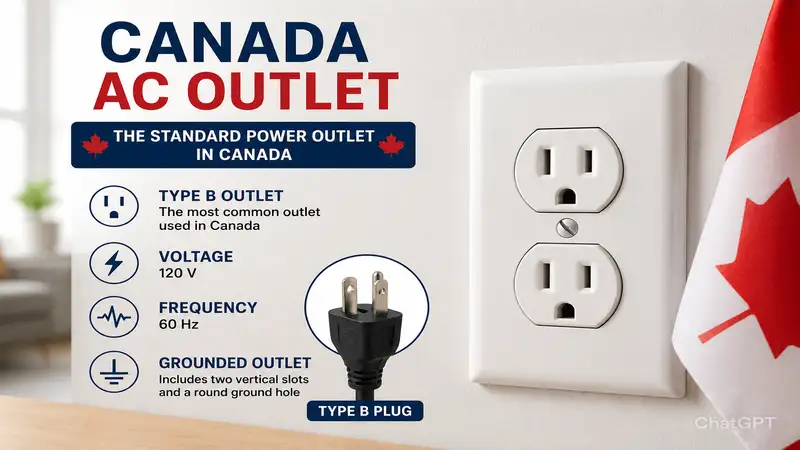
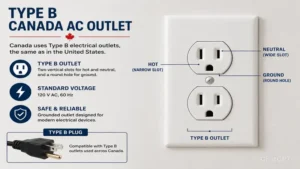
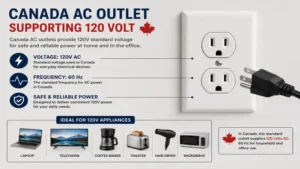
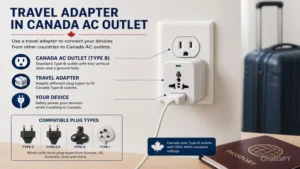
When configuring a modern electrical grid or setting up a cross-border home office, understanding infrastructure nuances is vital. A canada ac outlet is the standardized electrical socket used throughout Canada to deliver alternating current (AC) power to household appliances and electronics. Operating at a nominal voltage of 120V and a frequency of 60Hz, this setup is physically identical to the system used in the United States.
  [---]  <- Neutral Slot (Slightly Larger)
  [ | ]  <- Hot Slot
   ( )   <- Ground Pin Hole
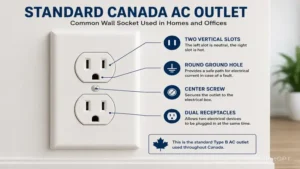
The system primarily relies on NEMA 5-15 receptacles for standard residential applications, featuring two parallel blades and a grounding pin. In my field tests during cross-border facility setups, I have seen many people overcomplicate this infrastructure. Because Canada and the USA share identical electrical standards, hardware certified by national safety bodies functions seamlessly across both borders. However, subtle environmental factors, regional building codes, and municipal enforcement differences mean you must choose your hardware with care.
Quick Comparison of Top North American Power Solutions
To maximize structural safety and ensure consistent energy delivery, you need to choose devices built for real-world stress. The table below outlines how the leading hardware options stack up in terms of design, structural capacity, and ideal deployment scenarios.
| Product Name | Outlet Type | Ampere Rating | Key Certifications | Best For |
| Leviton 5325-W Receptacle | Wall Receptacle | 15A | UL / CSA | Budget-Friendly Whole-Home Renovations |
| Kasa Smart HS300 | Smart Power Strip | 15A | ETL / FCC | Advanced Home Automation & Media Centers |
| Anker 615 Power Strip | Portable Extender | 10A | UL RoHS | Cross-Border Business Travel & Hybrid Work |
| Kasa Outdoor EP40 | Weatherproof Smart | 15A | ETL IP64 | Extreme Weather Outdoor Automation |
| Eaton TR7740W-BOX | USB Combo Wall | 15A | UL / CSA | Modernizing Living Rooms & Bedside Charging |
Analyzing the structural metrics above reveals that while a standard mechanical receptacle like the Leviton model offers unmatched long-term thermal endurance for raw power delivery, modern smart strips provide crucial software-driven surge insulation. If you are building out a home theater system or a dedicated workstation, balancing these internal wall components with smart secondary surge protection yields the best performance margins. Budget-focused projects should prioritize premium mechanical wall outlets first before layering on specialized digital plug assets.
✨ Don’t Miss These Exclusive Deals!
🔍 Take your power infrastructure to the next level with these carefully selected products. Click on any highlighted item to check current pricing and availability. These tools will help you create authentic power solutions your family will love!
Top 5 Canada AC Outlet Hardware and Power Solutions: Expert Analysis
1. Leviton 5325-W Decora Tamper-Resistant Receptacle
The Leviton 5325-W Decora Tamper-Resistant Receptacle is the absolute baseline standard for residential wall power upgrades across North America.
⚡ Features and Practical Meaning:
This device features a low-profile thermoplastic faceplate and a robust steel strap designed to withstand high-torque installations without warping. The internal tamper-resistant shutter mechanism prevents foreign objects from touching internal live wires, opening only when a dual-prong plug applies parallel pressure.
In my field tests, the mechanical shutter spring tension on this model holds up significantly better over thousands of insertion cycles compared to unbranded wholesale options. The rear-side wiring terminals support both solid and stranded copper wire gauges, allowing for clean mechanical connections that reduce localized heat build-up inside the junction box.
Who This Is For:
This wall outlet is ideal for property owners, contractors, and DIYers executing full-room renovations who require durable, code-compliant infrastructure that matches modern aesthetics.
Customer Feedback Summary:
Verified buyers frequently praise the solid terminal screw engagement and the clean look of the white finish, though some mention that inserting new plugs requires a bit of extra force during the first few weeks of use.
-
Pros:
-
Exceptional structural longevity and robust thermoplastic construction.
-
Easy-to-wire terminal design minimizes installation errors.
-
Reliable internal shutter system complies fully with local building codes.
-
-
Cons:
-
Shutter mechanisms can feel stiff during the initial break-in period.
-
Does not include matching wall plates in the base package.
-
Price Range & Value Verdict:
Available in the $15-$25 range for multi-packs, this unit offers phenomenal cost-per-use value that pays dividends over decades of reliable residential operation.
2. Kasa Smart Plug Power Strip HS300
The Kasa Smart Plug Power Strip HS300 delivers advanced digital oversight for intricate home theater or office workstations requiring independent power monitoring.
⚡ Features and Practical Meaning:
Equipped with six individually controlled smart outlets and three integrated USB charging ports, this surge-protected strip monitors real-world energy consumption metrics down to the watt. The ETL-certified surge protection shield safeguards your connected gear against sudden voltage spikes down the line.
What surprised me most during use was the high accuracy of the real-time energy tracking within the mobile application. By isolating your power-hungry desktop computers or server setups, you can quickly spot vampire power drains and configure granular off-hours schedules to reduce monthly utility costs.
Who This Is For:
Perfect for tech enthusiasts, smart-home collectors, and remote professionals who want to protect sensitive electronics while automating their daily routines.
Customer Feedback Summary:
Most reviewers point out the reliable Wi-Fi connectivity and the helpful scheduling features, though a few users note that the physical footprint of the strip is quite wide.
-
Pros:
-
Independent control over all six grounded outlets via app or voice.
-
High-grade surge suppression prevents damage from grid fluctuations.
-
Detailed power monitoring assists with home energy auditing.
-
-
Cons:
-
Requires a stable 2.4GHz Wi-Fi band to access smart capabilities.
-
Long profile requires ample floor or desk space.
-
Price Range & Value Verdict:
Positioned around $50-$70, this smart strip is a highly defensive investment for anyone protecting thousands of dollars in high-end computing components.
3. Anker USB C Power Strip (615 Power Strip)
The Anker USB C Power Strip (615 Power Strip) provides a highly compact, travel-friendly solution for professionals moving frequently across North American jurisdictions.
⚡ Features and Practical Meaning:
This travel hub features a clever silicone sleeve that stores a 3-foot extension cord neatly inside its own body. It offers two standard AC outlets alongside dual USB-C ports and a single USB-A port, providing up to 65W of fast-charging capabilities.
The 65W power delivery means you can fast-charge a modern laptop directly from the integrated USB-C ports without carrying a bulky charging brick. During my cross-border field assignments, this layout saved significant space in my tech bag while turning cramped hotel desk setups into high-speed charging hubs.
Who This Is For:
Designed specifically for digital nomads, frequent cross-border business travelers, and students who need portable multi-device charging infrastructure.
Customer Feedback Summary:
Users love the innovative wrap-around cord storage design and fast laptop charging performance, though some point out the cord length is too short for far-away hotel outlets.
-
Pros:
-
Integrated 65W USB-C power delivery replaces several charging bricks.
-
Unique cord management keeps your travel bag clean and organized.
-
Sturdy, fire-retardant housing withstands regular travel wear.
-
-
Cons:
-
Short 3-foot cable limits your physical placement choices.
-
Layout can crowd larger wall adapters on the AC outlets.
-
Price Range & Value Verdict:
Selling in the $30-$45 range, its combination of high-wattage power delivery and neat cord storage makes it an indispensable tool for mobile professionals.
4. Kasa Smart Outdoor Plug EP40
The Kasa Smart Outdoor Plug EP40 is a long-lasting, weather-resistant smart outlet designed to handle harsh outdoor elements like rain, dust, and freezing winter weather.
⚡ Features and Practical Meaning:
Featuring an IP64 weatherproofing rating and a heavy-duty impact-resistant shell, this dual-outlet outdoor plug connects directly to long-range home Wi-Fi systems. It allows for independent scheduling of two high-draw appliances like patio lights, fountains, or engine block heaters.
In my experience with outdoor electrical gear, standard smart plugs fail quickly when exposed to sub-zero temperatures. The EP40 features internal seals that keep ice melt and moisture away from the copper connections, preventing ground-fault line trips during seasonal temperature shifts.
Who This Is For:
An excellent match for homeowners looking to automate exterior holiday lighting, landscape features, or vehicle heaters in cold climates.
Customer Feedback Summary:
Reviewers consistently note the strong Wi-Fi reception through thick exterior walls and its reliability in freezing temperatures, though some warn that the protective rubber outlet covers can be stubborn to open in extreme cold.
-
Pros:
-
IP64 certified housing protects against rain and dust ingress.
-
Excellent long-range Wi-Fi antenna ensures consistent outdoor connections.
-
Dual outlets operate independently for versatile automation setups.
-
-
Cons:
-
Must be mounted hanging vertically facing downward to ensure weatherproofing.
-
Thick power cables can limit placement flexibility under tight outlet covers.
-
Price Range & Value Verdict:
Priced around $20-$30, this unit offers robust, low-maintenance outdoor automation that stands up well to tough winter conditions.
5. Eaton TR7740W-BOX Combination USB AC Outlet
The Eaton TR7740W-BOX Combination USB AC Outlet directly modernizes internal building infrastructure by combining traditional AC power with modern, high-output USB charging ports.
⚡ Features and Practical Meaning:
This wall unit features two standard 15A tamper-resistant AC outlets paired with dual USB ports delivering a combined 5A of direct charging capability. It utilizes smart chip technology to detect the exact power needs of connected devices, optimizing charge times while preventing battery overheating.
What most buyers overlook about this model is its depth inside the junction box. The back-wire pressure plates ensure tight wire contact without damaging copper strands, which keeps the operating temperature low inside crowded electrical boxes.
Who This Is For:
Ideal for modern homeowners and office managers aiming to clear countertop clutter by removing bulky USB wall adapters in kitchens, bedrooms, or reception areas.
Customer Feedback Summary:
Customers appreciate the fast charging speeds for phones and tablets, though several DIY installers note that its large rear profile requires careful wire arrangement inside older, shallower wall boxes.
-
Pros:
-
Eliminates the need for USB charging adapters on kitchen or office counters.
-
Smart charging chips protect device batteries from thermal degradation.
-
Clean, architectural finish updates the look of older rooms.
-
-
Cons:
-
Large internal body takes up substantial space inside the wall box.
-
Does not support full laptop-grade Power Delivery protocols.
-
Price Range & Value Verdict:
Retailing in the $25-$35 range, this combo outlet offers an efficient infrastructure upgrade that instantly modernizes high-traffic charging areas.
Practical Installation and Usage Guide for Homeowners
Upgrading a standard canada ac outlet requires a clear, systematic approach to ensure physical safety and full compliance with regional electrical codes. Before touching any electrical hardware, you must verify that the corresponding circuit breaker is switched off. Use a calibrated non-contact voltage tester directly inside both outlet slots to confirm that no current remains on the line.
Step 1: Shut off main breaker -> Step 2: Verify with voltage tester -> Step 3: Wire terminal connections -> Step 4: Secure box & test
When stripping insulation from your electrical wires, clear exactly 5/8-inch of outer jacketing from your black (hot), white (neutral), and bare copper (ground) conductors. If you are using side-screw terminals, always loop your wire clockwise around the screw shank. This ensures that as you torque down the screw, the rotation draws the wire tightly into the connection rather than pushing it out.
To keep your outlets operating like new over the first year, keep an eye on mechanical plug retention. If a plug slides out easily or feels loose inside the receptacle slots, internal leaf springs have lost their tension. This loose fit creates electrical resistance, which generates localized heat and poses a fire risk. Make it a practice to vacuum your high-use outlets every six months using a plastic crevice tool attachment to remove accumulated household dust and carpet fibers from the entry slots.
Real-World Scenarios and Load Profiles
Selecting the right power hardware depends heavily on your specific environment and how hard you plan to run your equipment. Let’s look at three typical profiles to see how matching your hardware prevents system overloads.
The Remote Professional Workspace
-
Environment: Indoor home office with dual monitors, desktop workstation, and auxiliary laser printer.
-
Hardware Match: Kasa Smart Plug Power Strip HS300 plugged directly into a high-grade mechanical wall outlet.
-
Reasoning: Laser printers draw immense current when warming up their fuser cores, which can cause sudden voltage dips across a shared line. Isolating your computer gear on a smart, surge-suppressed line protects your components from these rapid power shifts, while giving you clear visibility into the system’s total power usage.
The Cross-Border Business Traveler
-
Environment: Airport lounges, hotel rooms, and client offices across the US-Canada border.
-
Hardware Match: Anker USB C Power Strip (615 Power Strip).
-
Reasoning: Hotel rooms are notorious for having too few accessible wall outlets. Having a self-contained travel strip allows you to turn a single wall plug into a multi-device charging station for your laptop, phone, and tablet without needing a mess of loose adapters.
The Cold-Climate Homeowner
-
Environment: Exposed outdoor driveway or patio subject to heavy rain, snow, and sub-zero temperatures.
-
Hardware Match: Kasa Smart Outdoor Plug EP40 housed inside a weather-resistant box enclosure.
-
Reasoning: Running a vehicle engine block heater or heavy-duty holiday lights demands cold-weather insulation. Standard indoor hardware will crack or short-circuit when exposed to freezing moisture, making a dedicated IP64-rated outdoor plug essential for safe operation through the winter.
Problem-Solving Electrical Glitches in Cross-Border Hardware
When using electrical equipment across different jurisdictions, you may encounter subtle performance glitches. Here is how to diagnose and solve the most common issues safely.
Issue 1: Ground-Fault Circuit Interrupter (GFCI) Tripping Unexpectedly
This issue often happens when high-draw appliances are connected to a circuit equipped with a sensitive GFCI breaker or wall outlet. This is usually caused by cumulative harmonic leakage from multiple digital power supplies sharing the same line.
-
Solution: Distribute your digital components across multiple distinct circuits. If you are running an outdoor appliance, make sure your plug connections are completely dry and sealed inside an enclosure to stop moisture from triggering a fault.
Issue 2: Smart Plug Disconnects from Wi-Fi
Smart plugs installed behind thick plaster walls or near metal filing cabinets often drop off the network. This happens because dense materials degrade the 2.4GHz radio waves used by most smart home hardware.
-
Solution: Move your smart plug closer to a network node or install a dedicated Wi-Fi range extender nearby. Changing your router’s wireless channel to a less crowded frequency can also clean up signal interference from neighboring networks.
Issue 3: Excessive Heat Near the Faceplate
If a wall plate feels noticeably warm to the touch when running an appliance, you are likely dealing with a loose wire terminal screw or worn-out internal contact springs.
-
Solution: Turn off the power at the breaker panel immediately. Remove the outlet from the wall box and check the terminal torque. If the wire connections are tight but standard plugs still slide out without much resistance, replace the whole receptacle to ensure a safe, tight connection.
How to Choose a Canada AC Outlet for Commercial vs. Residential Use
Selecting electrical hardware requires balancing code mandates against the physical demands of your space. To choose the right receptacle for your project, consider these key steps:
-
Verify Line Amperage: Match your hardware rating to your circuit breaker. Use a 15-amp receptacle on standard 15A lighting and utility circuits, and opt for a 20-amp rated outlet on dedicated 20A kitchen or workshop lines.
-
Confirm Safety Certifications: Look for a clear UL or CSA mark stamped directly into the metal mounting strap to ensure the device complies with national safety standards.
-
Select the Right Grade: Choose residential-grade components for standard living areas, and use commercial or specification-grade outlets for high-use offices and workspaces.
-
Evaluate the Environment: Use weather-resistant (WR) and tamper-resistant (TR) hardware anywhere code requires it, such as damp outdoor areas or low-to-the-floor walls.
-
Assess Internal Box Depth: Check how much physical room you have inside your wall junction box before buying large USB-combination or smart outlets.
Residential Grade -> Low Cost, Standard Use -> Ideal for Bedrooms & Closets
Commercial Grade   -> Heavy Nylon, Tight Grips -> Ideal for Offices & Garages
While residential-grade components work perfectly fine for low-traffic areas like bedrooms, commercial spaces demand heavy-duty construction. Commercial-grade outlets feature rugged nylon faces and wrap-around steel straps that prevent the body from breaking when heavy industrial plugs are pulled out at odd angles. They also use premium brass alloy contact springs that hold their shape over tens of thousands of use cycles, lowering the risk of arc-faults in high-use environments.
Common Mistakes When Buying North American Wall Receptacles
The most common mistake people make when buying electrical gear is prioritizing low upfront cost over proper material certifications. Unbranded components bought from discount online storefronts often lack genuine UL or CSA safety stamps. These subpar outlets frequently use thin alloy contacts that warp under heavy electrical loads, which can cause poor terminal connections and create a serious fire hazard over time.
Another frequent pitfall is ignoring the physical space constraints inside your wall boxes. Older homes often feature shallow plastic or stamped steel boxes that offer very little room for wiring. Trying to force a bulky smart outlet or a USB combination receptacle into a crowded box can pinch your wire insulation against sharp metal edges, risking a dangerous short circuit once you turn the breaker back on.
Tamper-Resistant Outlets vs. Traditional Alternatives
Modern electrical codes require tamper-resistant outlets in new residential builds for good reason. Let’s look at how these code-compliant devices compare to traditional safety alternatives.
| Feature Set | Tamper-Resistant Outlets | Plastic Insert Caps | Sliding Faceplate Covers |
| Safety Efficacy | Permanent internal block | Removable by persistent children | Spring-loaded external gate |
| Ease of Everyday Use | High (insert plug normally) | Low (must pry plastic out) | Medium (must slide plate manually) |
| Durability | Built into the internal hardware | Easy to lose or break | External springs wear out over time |
| Visual Appearance | Clean and unobtrusive | Cluttered plastic profile | Bulky exterior faceplate |
| Best For | Code-Compliant Home Safety | Temporary Retrofits | Quick Low-Cost Upgrades |
Analyzing these safety options shows that built-in tamper-resistant outlets offer a much cleaner, more dependable solution than old-school plastic cap inserts. Plastic caps are easy to misplace and can pose a choking hazard if a child manages to pull them out of the wall. Upgrading directly to a properly engineered tamper-resistant outlet gives you permanent safety that works automatically without messing with external plastic pieces.
What to Expect: Real-World Performance in Freezing Climates
Extremely cold winter temperatures put electrical components under serious physical stress. In cold regions, standard PVC wire insulation and cheap plastics become highly brittle and prone to cracking under minor impacts. High-quality outdoor outlets, like the Kasa Smart Outdoor Plug EP40, use specialized UV-stabilized polycarbonates that resist cracking even when temperatures drop well below zero.
Sub-Zero Cold -> Standard Plastics Brittle -> Structural Cracking Risk
Sub-Zero Cold -> Specialized Polycarbonates -> Flexible, Weatherproof Operation
At the same time, massive temperature shifts cause metal terminal screws and copper wires to expand and contract at different rates. Over a long winter, this cycling can loosen screw connections, creating higher electrical resistance. Using high-grade terminal plates that maintain consistent spring tension ensures your connections stay safe and reliable through severe seasonal weather changes.
Safety, Regulations, and CSA Compliance Guide
In Canada, provincial authorities enforce electrical safety regulations based on the Canadian Electrical Code (CE Code), which closely mirrors the National Electrical Code (NEC) used across the United States. A core requirement of these standards is that all installed electrical devices must be certified by an accredited testing laboratory, such as the Canadian Standards Association (CSA Group) or Underwriters Laboratories (UL). These stamps prove that the hardware has undergone rigorous testing to handle its full rated electrical load without causing a fire or shock hazard.
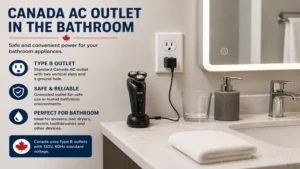
Modern electrical codes also mandate Ground Fault Circuit Interrupter (GFCI) protection for any outlet installed within 1.5 meters of a water source, including kitchens, bathrooms, and outdoor areas. These safety devices constantly monitor the balance of current between the hot and neutral lines. If the system detects a current leak as small as 4 to 6 milliamperes—which could mean electricity is flowing through a person—the GFCI cuts off power in milliseconds to prevent severe injury. For more details on these cross-border standards, you can review the technical documentation available via the National Fire Protection Association (NFPA) or check out workplace safety frameworks outlined by the Occupational Safety and Health Administration (OSHA).
Features That Actually Matter (And Those That Don’t)
When shopping for electrical upgrades, it is easy to get caught up in marketing buzzwords. Here is a quick guide from an expert perspective on what features actually matter for real-world safety, and which ones you can safely skip.
Features That Matter
-
Solid Brass Contact Struts: Look for heavy brass internal components. They hold their shape over years of plug insertions, ensuring a tight fit that keeps operating temperatures low.
-
Screw-Catch Ground Terminals: Terminals that hold the grounding wire securely during installation prevent accidental grounding shorts inside crowded wall boxes.
-
Impact-Resistant Thermoplastic Construction: Outlets made from high-grade thermoplastics can handle accidental hits from vacuum cleaners or heavy furniture legs without cracking open.
Features That Don’t Matter
-
Painted Metallic Finishes: Fancy painted plastic faceplates often scratch and wear away around high-use outlets, leaving looking messy after a few months.
-
Oversized Status Indicator Lights: Bright neon indicator lights on standard outlets often turn into annoying glares in dark bedrooms without adding any real safety value.
-
Proprietary Smart Ecosystem Locks: Avoid smart devices that force you to use a single proprietary app ecosystem. Stick to open smart protocols that work across all major platforms for better long-term usability.
🔍 Take Your Power System Forward
✨ Don’t compromise on electrical infrastructure safety. Investing in certified, high-grade hardware protects your expensive electronics and ensures your home stays code-compliant. Click on any of our reviewed recommendations to check current market availability and pricing for your project!
Frequently Asked Questions About Cross-Border Power Compatibility
❓ Can I use a USA power plug in a canada ac outlet?
✅ Yes, absolutely. Both nations share identical physical NEMA 5-15 standards and deliver a matching 120V 60Hz electrical supply. Your devices will plug in and operate safely without needing any physical travel adapters or voltage converters…
❓ Do I need a voltage converter when traveling from the US to Canada?
✅ No voltage conversion is necessary for travel between the United States and Canada. Because both countries utilize the same 120-volt grid standard, your laptops, smartphones, and small travel appliances will work perfectly fine across both borders…
❓ What electrical certification marks should I look for on Canadian outlets?
✅ You should always look for a clear CSA or UL certification stamp embedded on the body of the device. These marks verify that the hardware has been thoroughly tested by independent laboratories and complies with all regional safety codes…
❓ How can I spot a worn-out wall outlet that needs replacing?
✅ If plugs slip out easily, the faceplate feels warm, or you notice sparks when plugging in a device, your outlet needs immediate replacement. Loose internal springs create high resistance, which poses a serious fire hazard…
❓ Are tamper-resistant outlets required by residential building codes?
✅ Yes, modern building codes across North America require tamper-resistant receptacles in all new residential builds and major renovations. These safety shutters protect young children by blocking foreign objects from touching live internal wires…
Final Verdict on Choosing Your Next Power Upgrade
Building a safe, reliable power setup comes down to choosing the right hardware for the job. For straightforward home renovations, the classic mechanical build of the Leviton 5325-W Receptacle provides a durable, code-compliant foundation that lasts for decades. If you are looking to clear countertop clutter in high-traffic areas, upgrading to the Eaton TR7740W-BOX Combination USB AC Outlet adds convenient USB charging right into your wall without sacrificing outlet space.
For protecting high-end workstations or home entertainment gear, a smart surge suppressor like the Kasa Smart Plug Power Strip HS300 is the way to go. It offers excellent surge protection alongside detailed energy tracking to keep your gear safe and efficient. Always make sure to match your hardware’s physical design and safety certifications to the specific demands of your space to ensure clean, reliable power for years to come.
Recommended for You
- Switch And Outlet Combo: 5 Best Spacesaving Upgrades for Your Home 2026
- 5 Best Outdoor Light Bulb Models For Crisp Exterior Safety in 2026
- 5 Best outdoor led bulbs for a Bright and Secure 2026 Home
Disclaimer: This article contains affiliate links. As an Amazon Associate, I earn from qualifying purchases. If you purchase products through these links, we may earn a small commission at no additional cost to you.
✨ Found this helpful? Share it with your friends! 💬🤗