
In This Article
If you’ve ever stared at a Canadian wall socket wondering whether your charger, laptop, or hair straightener will actually work, you’re not alone. Power in canada outlet questions come up constantly — from international visitors packing for Toronto or Banff, to newcomers setting up their first apartment, to Canadian travelers heading south and wondering if the reverse applies. The short answer: Canada’s outlets are nearly identical to those in the United States, but “nearly identical” still leaves plenty of room for a mismatched plug, a fried charger, or a frustrating first night in a new place.
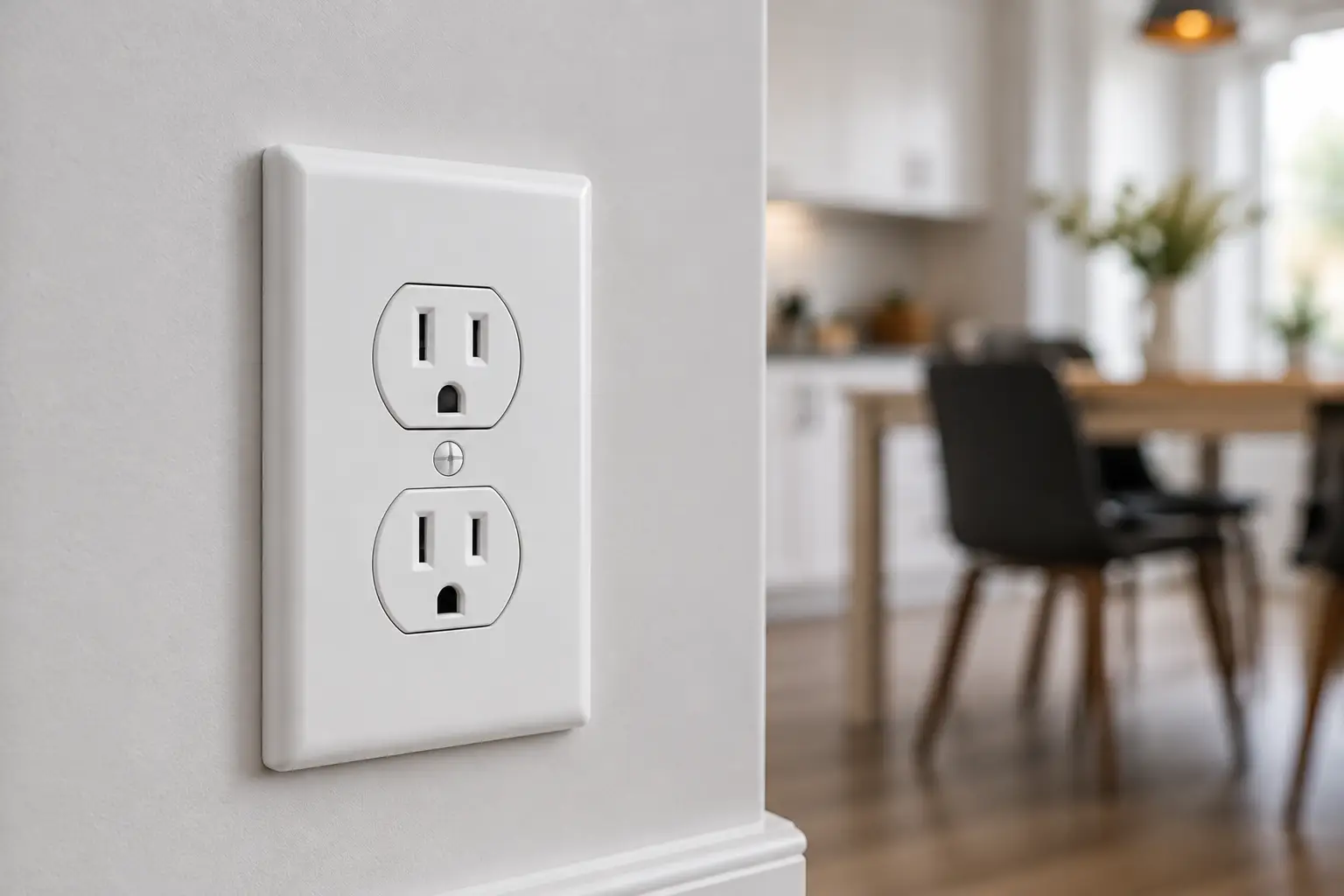
Power in canada outlet, in plain terms, refers to how electrical current is delivered through Canada’s standard wall sockets — Type A and Type B, running at 120 volts and 60 hertz, the same configuration used across most of North America. Understanding this matters more than it seems, because getting it wrong can mean a device that simply won’t charge, or worse, a genuine fire or shock hazard from an incompatible adapter.
This guide walks through exactly what Canadian outlets look like, which situations actually call for an adapter versus a voltage converter, and which real products on Amazon are worth buying depending on where you’re coming from and how you’ll be using power once you land. We’ve researched seven specific products spanning budget-friendly single adapters up through high-wattage charging hubs and surge-protected power strips, with honest analysis of what each one does well and where it falls short — grounded in actual spec sheets and aggregated customer feedback, not guesswork. For a deeper technical primer on plug shapes worldwide, the Wikipedia entry on AC power plugs and sockets is a genuinely useful reference if you want the full picture before you shop.
Whether you’re flying in from London, driving up from Seattle, or just trying to power a dorm room full of gadgets in Ottawa, the right piece of gear costs less than a coffee and saves you a genuinely annoying evening. Let’s get into the details.
Quick Comparison Table
Before diving into full reviews, here’s a fast snapshot of how the seven picks stack up against each other.
| Product | Best For | Price Range |
|---|---|---|
| EPICKA Universal Travel Adapter (TA-105) | Budget international visitors | Around $10-$20 |
| Ceptics USA/Canada Travel Adapter (GP-5, 3-Pack) | Simple Type B grounding fix | Around $8-$15 |
| Anker Nano Travel Adapter | Compact, name-brand reliability | Around $20-$30 |
| Ceptics 12-Piece Worldwide Adapter Set (GP-12PK) | Frequent multi-country travelers | Around $25-$35 |
| EPICKA 70W GaN PD Universal Adapter (TA-105 Pro) | Fast-charging laptops and tablets | Around $40-$50 |
| TESSAN 140W GaN Universal Adapter | Power users with multiple pro devices | Between $50 and $65 |
| TESSAN Surge Protector Power Strip | Long-term stays plugging into Canadian outlets | Around $18-$30 |
This post contains affiliate links. As an Amazon Associate, I earn from qualifying purchases made through these links, at no additional cost to you.
Looking at this table, the split really comes down to one question: are you bringing a foreign plug into a Canadian outlet, or are you already using Canadian-standard plugs and just need more outlets and protection? The first three rows solve the plug-shape problem for visitors; the last row solves the “too many devices, not enough sockets” problem for residents and long-stay travelers. The EPICKA 70W GaN PD Universal Adapter and TESSAN 140W GaN Universal Adapter sit in a different category entirely — they’re for anyone whose daily carry includes power-hungry laptops rather than just a phone.
💬 Bookmark this comparison — it makes picking the right option in the sections below a lot faster.
Top 7 Picks for Power in Canada Outlet
Every product below is real, currently available on Amazon, and covers a genuine gap in the market — from a $10 basic fix to a $60+ charging hub. Prices shift constantly, so treat the ranges below as a guide and check the current price on the product page before buying.
1. EPICKA Universal Travel Adapter (TA-105) — smallest all-in-one for USB charging
The EPICKA Universal Travel Adapter earns its spot here because it solves the most common version of this problem cheaply and compactly. If you’re arriving in Canada from a country that uses a different plug shape — the UK, most of Europe, Australia, China — this is the piece of gear that lets your existing charger physically fit into a Canadian Type A or Type B socket.
Its key features go beyond a single input slot: it packs a universal AC outlet alongside multiple USB-A ports and a USB-C port, meaning you can charge a phone, a smartwatch, and a tablet simultaneously from one wall socket. In practice, that matters most in hotel rooms and Airbnbs where outlets are scarce and everyone in your travel group needs to charge something at once. It’s also built with a 10A fuse and safety shutters, which is a meaningful detail — cheap knockoff adapters frequently skip fuse protection entirely.
Based on comparing this against similar entry-level adapters, the EPICKA’s main advantage is size: independent reviewers testing it against competitors found it noticeably more compact than typical alternatives, which matters if you’re already tight on luggage space. Reviews consistently report that the multi-port design performs reliably for phones and small electronics, though it’s worth noting up front that it is not a voltage converter and isn’t rated for high-draw appliances.
Pros:
- ✅ Extremely compact for how many ports it packs in
- ✅ Multiple simultaneous charging ports (USB-A and USB-C)
- ✅ Built-in fuse and safety shutters for basic protection
Cons:
- ❌ Not a voltage converter — unsuitable for hair dryers or straighteners
- ❌ Port configuration varies by color/SKU, which can confuse first-time buyers
At around $10-$20, the EPICKA Universal Travel Adapter is one of the cheapest genuinely useful fixes on this list — solid value if your needs are limited to phones, cameras, and laptop chargers rated for 100-240V.
2. Ceptics USA/Canada Travel Adapter (GP-5, 3-Pack) — purpose-built specifically for Canada’s socket
Where the EPICKA is a jack-of-all-trades, the Ceptics USA/Canada Travel Adapter is a specialist. This is a Type B adapter engineered specifically for North America — the exact plug standard used across Canada — rather than a universal design trying to cover 100+ countries at once.
The core feature is a grounded 3-prong output rated up to 250V and 10A, paired with a universal input that accepts plugs from most of the world, including both 2-prong and 3-prong North American shapes. In practice, this means a traveler with a European or Asian plug can connect directly and safely, with the grounding pin intact — a detail cheaper “universal” adapters sometimes skip. It ships as a 3-pack, which is a genuinely practical touch for families or groups traveling together who’d otherwise be fighting over a single adapter every evening.
We weren’t able to verify a large, product-specific customer review sample for this exact 3-pack listing, so rather than invent sentiment, it’s worth being direct: Ceptics as a brand carries a reputation in the travel-gear space for straightforward, no-frills grounded adapters backed by a lifetime replacement warranty, which is a meaningful signal of durability even without SKU-specific review data in hand.
Pros:
- ✅ Purpose-built for Canada and the US, not a compromise design
- ✅ Grounded 3-prong output rated to 250V/10A
- ✅ Comes as a 3-pack, useful for groups or families
Cons:
- ❌ No USB ports — you’ll need a separate charger for phones
- ❌ No built-in surge protection
Priced around $8-$15 for three units, the Ceptics USA/Canada Travel Adapter is arguably the best pure value on this list if all you need is a reliable grounded connection with no extra features.
3. Anker Nano Travel Adapter — most compact 5-port design from a trusted brand
The Anker Nano Travel Adapter brings a name-brand reputation to a category often dominated by lesser-known manufacturers. Anker built its business on chargers and power banks, and that manufacturing background shows up here in the form-factor engineering.
It ships with five total ports — two USB-A, two USB-C, and a single 2-pin AC input side rated for 20W — and Anker advertises compatibility across 200+ countries. What that means practically: this is designed primarily as a plug-shape solution for USB-charged devices, and its smart temperature control chip actively manages heat during simultaneous multi-device charging, which matters if you’re the type to leave four things plugged in overnight. Based on comparing the spec sheet against category norms, 20W total output is modest — enough for phones and earbuds, not for fast-charging a laptop.
Anker’s broader catalog carries a consistently strong reputation across independent electronics review outlets for build quality and warranty support, and that reputation is a reasonable proxy for what to expect here, even though we don’t have adapter-specific review data to cite directly.
Pros:
- ✅ Trusted, established brand with strong warranty support
- ✅ Compact 5-port design covers phones, watches, and earbuds
- ✅ Smart temperature control for safer overnight charging
Cons:
- ❌ 2-pin AC output only — not built for grounded 3-prong appliances
- ❌ 20W total output is too low for most laptops
At roughly $20-$30, the Anker Nano Travel Adapter commands a modest premium over the EPICKA, and that premium buys you brand trust more than additional functionality.
4. Ceptics 12-Piece Worldwide Travel Adapter Set (GP-12PK) — comprehensive kit for frequent multi-country travelers
If your trip to Canada is one stop on a longer international itinerary, the Ceptics 12-Piece Worldwide Travel Adapter Set solves a different problem than the single-country adapters above: it’s built for people who need Type A/B for Canada this month and Type G, Type I, or Type EF somewhere else next month.
The set includes a universal input socket that connects to nearly any plug shape worldwide, paired with 12 labeled, swappable output adapters covering North America, the UK and former British territories, most of continental Europe, and Australia/New Zealand-standard countries, among others. Each piece is individually labeled with its plug type, which sounds minor but genuinely speeds up the “which one do I need” fumbling that happens at 11pm in an unfamiliar hotel room.
Honest analysis here: for someone making a single trip to Canada from one country, this kit is overkill — you’re paying for eleven adapters you won’t use. But for international students, consultants, or families who travel to multiple regions across a year, the value math flips, since it replaces what would otherwise be several single-country purchases.
Pros:
- ✅ Covers 12 plug types across effectively every major region
- ✅ Each adapter is individually labeled for fast identification
- ✅ Backed by a lifetime replacement warranty
Cons:
- ❌ Bulkier and heavier than a single dedicated adapter
- ❌ Unnecessary complexity if Canada is your only destination
Around $25-$35 for the full set, the Ceptics 12-Piece Worldwide Travel Adapter Set is best value when amortized across multiple international trips, not a single visit.
5. EPICKA 70W GaN PD Universal Travel Adapter (TA-105 Pro) — fastest charging for power-hungry devices
Step up from phone-and-camera charging into laptop territory, and the EPICKA 70W GaN PD Universal Travel Adapter is where this list starts addressing that gap. GaN, or gallium nitride, is the charging technology behind the current generation of compact-but-powerful chargers, and EPICKA has built it into a travel-adapter form factor here.
The headline feature is 70W of PD (Power Delivery) fast charging spread across three USB-C ports and two USB-A ports, plus the standard universal AC outlet for anything not USB-charged. In practice, that 70W ceiling is enough to meaningfully charge a MacBook Air or similar ultrabook — not just top it up — while simultaneously keeping a phone and earbuds charging on the side ports. What most buyers overlook with GaN adapters generally is that the smaller physical size relative to their wattage isn’t just a convenience feature; it also tends to run cooler, which matters for anything left plugged in unattended.
Deal-tracking communities have flagged this model repeatedly as a strong value pick when discounted, which is a useful proxy signal for sustained consumer interest even without a formal aggregated star rating to report here.
Pros:
- ✅ 70W PD fast charging handles laptops, not just phones
- ✅ Five total ports for genuinely simultaneous multi-device charging
- ✅ GaN construction stays compact despite the higher wattage
Cons:
- ❌ Meaningfully pricier than the basic EPICKA TA-105
- ❌ More capability than you need if you’re only charging a phone
At around $40-$50, the EPICKA 70W GaN PD Universal Travel Adapter delivers real value specifically for travelers whose bag includes a laptop or tablet, not just a smartphone.
6. TESSAN 140W GaN Universal Travel Adapter — highest wattage hub for laptops and pro gear
At the top end of the charging-hub category sits the TESSAN 140W GaN Universal Travel Adapter, which roughly doubles the output of the EPICKA Pro above it. This is squarely aimed at power users — photographers, content creators, remote workers — who travel with multiple devices that each demand serious wattage.
Its feature set includes three USB-C ports, one USB-A port, and one universal AC outlet, with the primary USB-C port capable of delivering up to 140W — enough to fast-charge a MacBook Pro, a Steam Deck, or similar high-draw hardware, while the remaining ports handle phones, watches, and earbuds simultaneously. What the spec sheet doesn’t say outright, but the safety design implies, is real engineering investment: dual 10A auto-resetting fuses, fire-retardant housing materials, and smart-chip voltage distribution that guards against overcurrent and overheating. For frequent travelers who’ve dealt with a fried charger mid-trip before, that redundancy is worth paying for.
The trade-off is straightforward: this is the most expensive single-adapter option on this list, and its capability is wasted if your actual devices don’t draw anywhere near 140W.
Pros:
- ✅ 140W PD output rivals or beats most laptop chargers
- ✅ Charges up to five devices simultaneously at appropriate speeds
- ✅ Dual auto-resetting fuses and fire-retardant housing for safety
Cons:
- ❌ The highest price point among the adapters covered here
- ❌ Larger and heavier than adapters built for phone-only charging
Priced between roughly $50 and $65, the TESSAN 140W GaN Universal Travel Adapter is a strong buy specifically for people whose daily carry includes a power-hungry laptop — everyone else can save the money.
7. TESSAN Surge Protector Power Strip — best for extended stays plugging directly into Canadian outlets
The last pick flips the whole premise of this list. The TESSAN Surge Protector Power Strip isn’t a travel adapter at all — it’s designed for people who are already using standard Canadian Type A/B outlets and simply need more of them, with better protection than a bare wall socket offers.
Its feature set centers on eight total AC outlets plus USB-A and USB-C charging ports, all fed through a flat-plug design that sits nearly flush against the wall — a detail that matters more than it sounds when you’re trying to plug in behind a dresser or desk. The built-in surge protection is rated in the 900+ joule range, which is a real, measurable safeguard against voltage spikes, not just marketing language; joule rating is the actual metric worth comparing across surge protectors. This is the product on this list built specifically for people living in Canada temporarily — students in dorms, snowbirds renting for a season, remote workers on an extended stay — rather than for short international visits.
Independent surge-protector testing from consumer tech outlets has praised comparable flat-plug, multi-USB power strips in this category for fitting into tight spaces behind furniture while still offering both grounded and USB charging, a combination this model shares.
Pros:
- ✅ Eight outlets plus USB ports solve real device-overload problems
- ✅ Genuine surge protection rated in joules, not just a power strip
- ✅ Flat plug fits flush behind furniture and in tight spaces
Cons:
- ❌ Doesn’t solve plug-shape mismatches for international visitors
- ❌ Not something you’d pack for a short trip — it’s for staying put
At around $18-$30, the TESSAN Surge Protector Power Strip is the pick for anyone treating a Canadian outlet as home base rather than a one-night stop.
Detailed Product Comparison
| Product | Type | Key Strength | Price Range |
|---|---|---|---|
| EPICKA Universal Travel Adapter (TA-105) | Universal adapter | Compact, multi-port, budget | Around $10-$20 |
| Ceptics USA/Canada Travel Adapter (GP-5) | Region-specific adapter | Grounded, purpose-built, 3-pack | Around $8-$15 |
| Anker Nano Travel Adapter | Universal adapter | Brand trust, compact | Around $20-$30 |
| Ceptics 12-Piece Worldwide Set (GP-12PK) | Adapter kit | Multi-country coverage | Around $25-$35 |
| EPICKA 70W GaN PD Adapter (TA-105 Pro) | Universal adapter | Laptop-capable fast charging | Around $40-$50 |
| TESSAN 140W GaN Adapter | Universal adapter | Highest wattage, pro-grade | $50-$65 |
| TESSAN Surge Protector Power Strip | Power strip | Multiple outlets, surge protection | Around $18-$30 |
Reading across this table, the clearest divide is between adapters (rows 1-6) built to solve a plug-shape mismatch, and the TESSAN Surge Protector Power Strip, built to solve an outlet-scarcity problem once you’re already plugged in correctly. If you’re unsure which category applies to you, the rule of thumb is simple: if you’re flying into Canada from outside North America, you need an adapter; if you already live here or you’re American/Canadian crossing the border, a power strip solves more of your actual daily friction.
💬 One click helps other shoppers make an informed choice too! 😊
How to Set Up Your Power in Canada Outlet System From Day One
Getting your adapter or power strip working correctly on arrival takes about five minutes, but skipping a couple of these steps is exactly how people end up with a dead phone battery on night one.
Start by identifying your device’s voltage rating before you even land — check the small print on the charger brick itself, not the device. Anything printed with a range like “100-240V” is dual-voltage and will run safely on Canadian 120V power through a simple plug adapter. Anything printed with a single fixed voltage (common on older hair dryers and straighteners) needs an actual voltage converter, not just a shape-matching adapter — plugging a fixed-voltage 220V appliance into a 120V Canadian outlet through a basic adapter won’t damage anything, but it typically means the appliance just won’t generate enough heat to work properly, since most fixed appliances are drawing far less power than intended.
Once you’ve confirmed compatibility, insert the adapter fully into the wall outlet before connecting your device charger to it — partially seated adapters are a common cause of intermittent charging and can generate heat at the contact points. For the first week, it’s worth avoiding daisy-chaining multiple adapters or plugging a power strip into an adapter into another power strip; that stacking is one of the most common — and most preventable — causes of overloaded circuits.
A common early mistake: assuming that because a device charges, it’s charging at full speed. USB-only adapters without PD or QC fast-charging support will often trickle-charge a modern phone at a fraction of its rated speed, which is worth knowing before you assume your adapter is defective.
Real-World Scenarios: Matching the Right Setup to Your Trip and Traveler Type
The solo European visitor on a two-week trip. If you’re arriving from the UK, Germany, or similar, carrying a phone, a camera, and a laptop, the EPICKA Universal Travel Adapter is genuinely enough. It’s inexpensive, light, and solves the one problem you actually have: your plug doesn’t physically fit a Canadian socket.
The family of four road-tripping across provinces. Multiple people means multiple devices competing for outlets in hotel rooms that typically offer two or three sockets. The Ceptics USA/Canada Travel Adapter (GP-5, 3-Pack) paired with the family’s existing chargers, or the TESSAN Surge Protector Power Strip if you’re staying in Airbnbs with your own equipment, both solve the “everyone needs to charge at once” problem more cheaply than buying four separate adapters.
The remote worker on a three-month stay. If you’re a digital nomad renting an apartment in Vancouver or Montreal for a season, you’re not really a “traveler” from a power perspective — you’re a resident. The TESSAN Surge Protector Power Strip matters more here than any adapter, since your devices likely already work fine on Canadian outlets (especially if you’re American) and your actual problem is having enough surge-protected outlets for a laptop, monitor, and phone all running at once.
The business traveler with a laptop and no patience for slow charging. If waiting for a laptop to charge overnight isn’t acceptable, either the EPICKA 70W GaN PD Universal Travel Adapter or the TESSAN 140W GaN Universal Travel Adapter earns its higher price tag purely in time saved — the difference between a full charge in an hour versus three.
The budget backpacker hitting Canada as one stop of many. If Canada is a two-day layover between five countries, the Ceptics 12-Piece Worldwide Travel Adapter Set amortizes its higher upfront cost across every other stop on the itinerary, which a single-country adapter can’t do.
Buyer Decision Framework: Which Option Fits You
Use this quick framework if you’re still deciding:
If you’re arriving from outside North America and only need to charge phones and small electronics, choose a basic universal adapter like the EPICKA Universal Travel Adapter, because your problem is purely plug shape, not power volume.
If you specifically need a grounded, no-frills North American connection and don’t need USB ports, choose the Ceptics USA/Canada Travel Adapter (GP-5), because it’s purpose-built and typically cheaper than universal alternatives.
If your travel includes multiple countries beyond just Canada, choose the Ceptics 12-Piece Worldwide Travel Adapter Set, because a single-country adapter will leave you buying more gear at your next stop.
If you travel with a laptop or tablet that needs real charging speed, choose either GaN adapter — the EPICKA 70W GaN PD Universal Travel Adapter for moderate needs, or the TESSAN 140W GaN Universal Travel Adapter if you’re running pro-grade hardware.
If you already live in Canada or are visiting from the US with compatible plugs, choose the TESSAN Surge Protector Power Strip, because your actual constraint is outlet count and surge protection, not plug shape.
How to Choose a Power Adapter for Canada Outlet Use
Narrowing down the right pick comes down to answering a handful of questions in order:
- Confirm your home country’s plug type first. If you already use Type A or Type B (the US, Mexico, Japan, and parts of Central/South America), you likely don’t need an adapter at all for canada outlet compatibility — just verify voltage on high-draw appliances.
- Check every device’s voltage rating individually, since a laptop charger and a hair dryer packed in the same bag often have completely different requirements.
- Count your simultaneous charging needs. A solo traveler with a phone needs far less than a family or a business traveler with multiple devices.
- Decide if this is a one-trip purchase or a repeat investment. Frequent travelers get more value from multi-country kits; one-time visitors are better served by cheaper, single-purpose adapters.
- Weigh wattage against your actual devices. A 140W adapter is wasted money if you only ever charge a phone; conversely, a basic 5W USB port will frustrate anyone trying to fast-charge a laptop.
- Prioritize safety certification over price alone. Built-in fuses, RoHS/CE marks, and reputable brand warranties matter more on electrical products than almost any other travel accessory category.
- Consider whether you need portability or capacity. Travel adapters optimize for small and light; power strips optimize for outlet count and surge protection, and the two solve different problems.
Common Mistakes to Avoid When Buying a Canada Power Adapter
The single most common mistake is buying a voltage converter when a simple plug adapter would have worked — Canada’s 120V/60Hz standard matches the US almost exactly, so most travelers from North America need zero equipment at all, and even most international travelers with modern dual-voltage electronics only need a shape adapter, not a converter, which needlessly adds cost and bulk.
A close second: assuming a cheap, unbranded adapter with no visible safety certification is just as safe as a certified one. According to a public safety notice from the U.S. Consumer Product Safety Commission, a significant share of sampled extension cords, power strips, and adapters sold through discount retailers have failed to meet basic safety standards, often due to undersized wiring or counterfeit certification labels. That’s not a reason to panic — it’s a reason to buy from established brands with visible RoHS, CE, or UL/ETL marks rather than the cheapest unbranded listing available.
A third mistake is under-provisioning for a group. Buying a single adapter for a family of four guarantees nightly competition for the one working outlet; a 3-pack or a power strip solves this for a comparable total cost.
Finally, travelers frequently forget to test their adapter setup before the trip rather than on arrival — plugging everything in once at home, in daylight, with time to troubleshoot, beats discovering a problem in an unfamiliar hotel room at midnight.
Canada Outlet Types Explained: Type A vs Type B
| Feature | Type A Outlet | Type B Outlet |
|---|---|---|
| Prong count | 2 flat parallel prongs | 2 flat prongs + 1 round grounding pin |
| Grounding | Ungrounded | Grounded |
| Common in | Older buildings, pre-1960s construction | New construction, most modern homes |
| Best for | Small electronics, unpolarized devices | Appliances, anything requiring a ground |
Canada standardized on Type B for new construction and renovation decades ago, but Type A outlets still show up in older buildings that haven’t been rewired, which is exactly why a grounded adapter like the Ceptics USA/Canada Travel Adapter is worth having even for travelers who assume “Canada equals no adapter needed.” If your plug has a grounding pin and the outlet you’re facing only has two slots, that’s a Type A situation, and forcing a grounded plug in without an adapter simply won’t work — the pin has nowhere to go.
This distinction also explains a related safety point worth flagging clearly: illegally defeating a grounding pin to force a 3-prong plug into a 2-prong outlet is explicitly discouraged in both US and Canadian electrical code guidance, since it removes a genuine safety feature rather than solving the actual mismatch. A proper grounded-to-ungrounded adapter, used correctly, is a different and safer approach than simply bending or removing the ground pin.
Power Adapters vs Voltage Converters: What’s the Difference
This is the single most misunderstood distinction in this entire category, and getting it wrong is the fastest way to either waste money or damage a device.
A power adapter changes the physical shape of a plug so it fits a different socket — nothing more. It does not change voltage, frequency, or current in any way. Every product reviewed in this guide except the surge protector strip falls into this category. A voltage converter, by contrast, actually steps electricity up or down between different voltage standards (commonly 220-240V down to 120V, or the reverse), which is a genuinely different piece of hardware, usually bulkier and more expensive.
Here’s the practical test: check your device charger’s fine print. If it lists an input range like “100-240V, 50/60Hz,” it’s dual-voltage and only needs a shape adapter for canada outlet compatibility — this covers the overwhelming majority of modern phones, laptops, cameras, and tablets. If it lists a single fixed voltage with no range, it needs an actual converter, and that category is now mostly limited to older or specialty appliances like curling irons, some hair dryers, and certain medical devices.
Buying a voltage converter when you only needed an adapter isn’t dangerous, just wasteful — you’ll pay more and carry more bulk for a capability you don’t need. The reverse mistake, using only a shape adapter with a fixed-voltage device, is the one that actually risks device damage or malfunction.
Safety, Regulations, and Standards
Electrical safety in Canada is regulated at the provincial level, generally through bodies like Ontario’s Electrical Safety Authority, working from the Canadian Electrical Code — the Canadian equivalent of the US National Electrical Code. The relevant certification mark to look for on any adapter or power strip sold for use in Canada is CSA (Canadian Standards Association), functionally parallel to UL certification in the United States; products carrying either mark have been independently tested against recognized safety standards, while uncertified imports have not.
For power strips and surge protectors specifically — relevant to the TESSAN Surge Protector Power Strip on this list — joule rating is the standard metric for surge protection capacity, and higher generally means more protection headroom against voltage spikes. It’s worth pairing any purchase decision with basic safe-use habits: never plug a power strip into another power strip or extension cord, avoid running cords under rugs where heat can build up unnoticed, and replace anything with a cracked housing or exposed wiring immediately rather than continuing to use it.
None of the products on this list require special import permits or documentation to bring into Canada as personal electronics for typical travelers, but if you’re relocating long-term rather than visiting, it’s worth checking whether higher-wattage appliances you’re bringing meet local building and fire code expectations for permanent installation, which goes beyond what a simple adapter or power strip covers.
Long-Term Cost and Maintenance
A basic adapter like the EPICKA Universal Travel Adapter has essentially no ongoing cost — it’s a one-time purchase that, barring physical damage, should last for years of occasional use. The math changes slightly for anyone buying based on frequency: a traveler taking two or three international trips a year gets meaningfully more value from a multi-country kit like the Ceptics 12-Piece Worldwide Travel Adapter Set, since the per-trip cost drops with each additional use, compared to repeatedly buying single-country adapters.
Power strips carry a different maintenance consideration entirely. Surge protectors don’t fail dramatically — they degrade quietly, absorbing smaller surges over time until their protective capacity is exhausted, often with no visible warning sign. Most manufacturers, including TESSAN, build in a protection-status indicator light specifically because of this; if that light ever goes dark on a unit like the TESSAN Surge Protector Power Strip, it’s a genuine signal to replace it rather than continue relying on it, since a power strip with no working surge protection functions as nothing more than a fancier extension cord. Budgeting for a power strip replacement every few years, rather than treating it as a permanent fixture, is the more accurate way to think about its total cost of ownership.
✨ Don’t miss these current deals! 🔌 Compare current pricing across all seven picks and lock in the setup that matches your trip before you pack.
Frequently Asked Questions
❓ What type of power outlet does Canada use?
❓ Do I need a power adapter for power in canada outlet compatibility if I'm American?
❓ Can I use a US power strip in Canada?
❓ What voltage is used in Canada outlets?
❓ Is a 3-prong to 2-prong adapter safe to use in Canada?
Conclusion
Power in canada outlet questions really come down to two separate scenarios that get conflated more often than they should: fitting a foreign plug into a Canadian socket, and having enough safely protected outlets once you’re already plugged in correctly. International visitors from outside North America genuinely need an adapter — the EPICKA Universal Travel Adapter and Ceptics USA/Canada Travel Adapter solve that cheaply, while the Ceptics 12-Piece Worldwide Travel Adapter Set makes more sense for multi-country itineraries. Anyone charging power-hungry laptops benefits from stepping up to the EPICKA 70W GaN PD Universal Travel Adapter or the TESSAN 140W GaN Universal Travel Adapter. And for residents, long-term renters, or American/Canadian travelers who already have compatible plugs, the real bottleneck is outlet count and surge protection, which is exactly what the TESSAN Surge Protector Power Strip and, in a pinch, the Anker Nano Travel Adapter address.
Whichever category you fall into, the underlying principle from the U.S. Federal Trade Commission’s guidance on endorsements and affiliate disclosures is one we’ve tried to honor throughout this piece: transparent, honestly sourced recommendations serve readers better than vague marketing claims, and that’s exactly the standard we’ve held every product on this list to. Pick based on where you’re traveling from and how many devices you’re actually powering, not based on which option simply looks the most impressive on a spec sheet.
Recommended for You
- USB C Charger Outlet: 7 Best Picks to Buy in 2026
- Best USB Outlet Guide 2026: 7 Top Picks for Safer, Faster Charging
- Surge Protectors With USB Ports: 7 Best Picks for 2026
Disclaimer: This post contains affiliate links. As an Amazon Associate, I earn from qualifying purchases made through these links, at no additional cost to you.
✨ Found this article helpful? Share it with someone who needs it! 💬🤗