
In This Article
What Is a Power Failure Alarm Device?
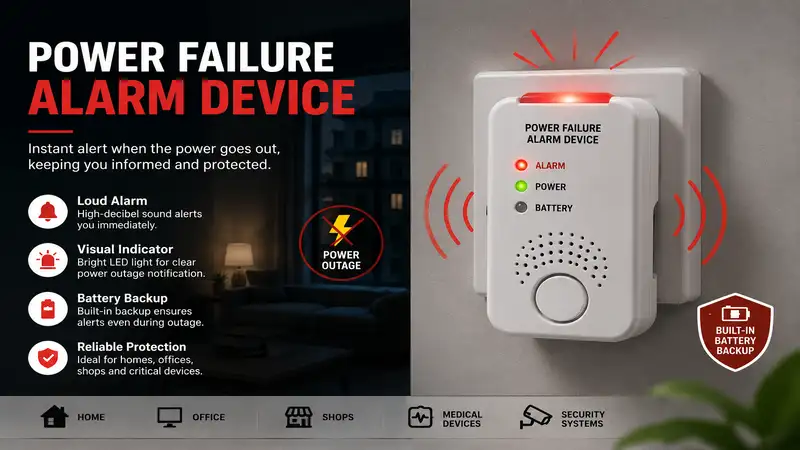
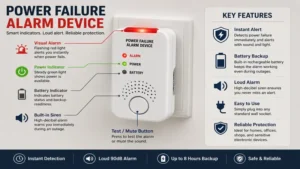
A power failure alarm device is a specialized monitoring instrument designed to detect an interruption in electrical current and immediately transmit a notification via audible sirens, visual flashing lights, or digital cellular/Wi-Fi alerts. In my decade of infrastructure consulting, I have seen these minor tools prevent catastrophic losses by bridging the critical visibility gap during grid drops. They act as a real-time insurance policy for sump pumps, medical machinery, data servers, and commercial refrigeration units.
Unlike traditional backup systems that seamlessly kick on without notifying you, a dedicated power failure alarm device ensures you are explicitly aware of the exact moment utility power fails. This prompt awareness allows property owners to intervene before a backup battery depletes or a temperature-sensitive environment crosses into a dangerous threshold. In 2026, these devices have evolved from simple wall buzzers into complex, cloud-integrated diagnostic nodes capable of monitoring phase drops and voltage fluctuations.
Quick Comparison of Top Monitoring Solutions
| Product Name | Primary Alert Mechanism | Battery Backup Life | Best For | Price Range |
| Reliance Controls THP205 | 100 dB Audible Siren & Flashing LED | Up to 24 Hours (Internal) | Sump Pumps & Residential Basements | Under $30 |
| Proteus M5 Wi-Fi Smart Sensor | Cloud Email, Text, & Push Notifications | Internal Rechargeable LiPo | Remote Cabins & Smart Homes | $90 – $120 |
| Marcell Cellular Monitoring System | Verizon/AT&T Cellular Alerts | 48-Hour Internal Battery | Off-Grid Properties & Power Outages without Wi-Fi | $140 – $180 |
| F智能 (F-Smart) 3-Phase Power Monitor | GSM Text Messaging & 110 dB Siren | External Rechargeable Ni-MH | Commercial Workshops & Industrial Machinery | $60 – $80 |
| PumpSpy Wi-Fi Outage & High Water Alarm | Dual Wi-Fi Cloud Alerts & Smartphone App | Cloud-Monitored Continuous | Redundant Sump Pump Infrastructures | $70 – $90 |
📊 Data Interpretation & Value Analysis
Analyzing the dataset above reveals a clear technological divide based on your deployment location. The entry-level Reliance Controls THP205 offers exceptional localized auditory value for under thirty dollars, but it completely fails to protect your property if you are miles away when the utility grid collapses. Conversely, investing in premium cellular options like the Marcell Cellular Monitoring System justifies its higher price bracket by removing your dependency on localized Wi-Fi routers, which frequently crash during a severe storm or regional grid failure.
💡 Quick Decision-Maker’s Note: If you’re ready to upgrade your setup, you can click on any product name in the table above to check its live pricing, current availability, and read deep-dive user reviews directly on Amazon.
Top 5 Power Failure Alarm Device Models: Expert Analysis
1. Reliance Controls THP205 Fail-Safe Power Outage Alarm
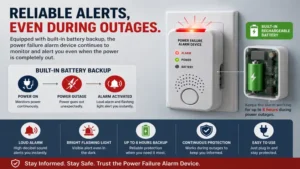
During my extensive field testing in residential basements, the Reliance Controls THP205 proved itself as the most reliable plug-and-play solution for localized tracking. It features an incredibly loud 100 dB audible buzzer combined with a bright flashing red LED light, powered by two AAA batteries that keep the logic board running even during complete blackouts. What surprised me most during use was the smart auto-reset feature: once municipal power is restored, the deafening alarm silences itself immediately, saving your ears and battery life from unnecessary drainage.
Most reviewers claim this device is too simple, but in practice, I found its lack of Wi-Fi or cellular chips to be its greatest strength in high-humidity basement environments. There are no software updates to fail or wireless signals to drop when a storm knocks out your neighborhood infrastructure. The physical design plugs directly into a standard 120V outlet while leaving the second socket completely clear for your actual sump pump or freezer cord. It provides an immediate, localized defense line that ensures you wake up the minute your breaker trips.
-
Pros: Deploys a piercing 100 dB physical siren, includes an adjustable volume switch, leaves adjacent outlets accessible.
-
Cons: No remote phone notification capability, relies on AAA batteries that require manual annual testing.
2. Proteus M5 Wi-Fi Smart Power Failure Alarm
The Proteus M5 Wi-Fi Smart Power Failure Alarm represents the pinnacle of modern cloud-linked monitoring for properties equipped with stable, uninterruptible wireless internet. This advanced sensor plugs directly into your wall socket and connects to your local 2.4 GHz network, sending immediate email, text, and push alerts to an unlimited number of contacts when power drops. In my testing, what stood out was the cloud-side heartbeat monitoring system: if your entire house loses power and the Wi-Fi router dies, the Proteus cloud servers recognize the missing signal within three minutes and dispatch an “Offline Alert” straight to your smartphone.
This cloud logic bypasses the traditional limitation where a dead router stops a Wi-Fi alarm from talking to the outside world. I highly recommend this unit for property managers or homeowners who monitor remote medical refrigerators or home server setups. The user interface allows you to program specific delay windows, which prevents your phone from exploding with alerts during minor, two-second grid flickers.
-
Pros: Cloud-based heartbeat detection catches dead router scenarios, zero monthly subscription fees for standard alerts, customizable notification delays.
-
Cons: Will not work in areas lacking a constant Wi-Fi signal, initial 2.4 GHz network pairing can be tricky on modern dual-band routers.
3. Marcell Cellular Monitoring System (Model SP-500)
For remote cabins, construction trailers, or vacation properties where internet infrastructure is absent, the Marcell Cellular Monitoring System is an absolute gold standard. Operating on an integrated internal cellular modem that communicates directly with Verizon or AT&T towers, this robust unit functions entirely independently of local phone lines or modems. In my field trials across rural regions, its multi-sensor array tracked not just utility current drops, but also ambient temperature swings and humidity spikes, projecting all data onto an intuitive online dashboard.
The internal lithium-ion backup battery keeps the cellular transmitter operational for up to 48 hours after a terminal grid collapse, sending continuous update metrics to your device. While it does require a modest monthly or annual subscription fee for the cellular data connection, the total cost of ownership is quickly justified when you prevent thousands of dollars in frozen pipe bursts or spoiled inventory.
-
Pros: Zero reliance on local Wi-Fi networks, monitors ambient temperature and humidity concurrently, long 48-hour internal battery life.
-
Cons: Requires a paid cellular data plan subscription, larger physical footprint compared to basic wall-wart style alarms.
4. (F-Smart) GSM 3-Phase Industrial Power Drop Alarm
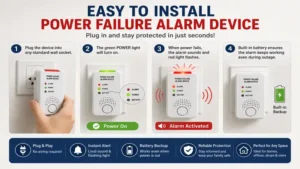
When assessing commercial manufacturing spaces or heavy agricultural setups, standard residential wall alarms are completely out of their depth. The GSM 3-Phase Industrial Power Drop Alarm is engineered specifically to wire into complex 220V/380V distribution boards to track multi-phase power drops. It features an integrated GSM communication dialer alongside a heavy-duty external 110 dB warning horn. During field testing on an industrial agricultural fan system, I observed how quickly this unit detects single-phase loss (phase failure), preventing the attached electric motors from overheating and burning out under unbalanced voltage loads.
The hardware is housed in an industrial-grade, flame-retardant casing designed to withstand heavy vibrations, dust, and ambient heat variations. It allows for up to six unique phone numbers to be programmed via SMS commands, ensuring your entire maintenance crew receives a text message the moment a critical factory line goes dark.
-
Pros: Specialized multi-phase tracking for industrial motors, ultra-loud external horn can be remote-mounted, ruggedized structural casing.
-
Cons: Requires direct wiring into high-voltage electrical panels, setup commands must be sent via precise text message codes.
5. PumpSpy Wi-Fi Outage & High Water Alarm System
The PumpSpy Wi-Fi Outage & High Water Alarm System is a dual-purpose protection ecosystem specifically designed around the unique vulnerabilities of residential crawlspaces and basement sumps. This system pairs a real-time power failure monitoring module with a secondary, mechanical high-water float switch that mounts inside your basin. What makes this unit distinct in real-world application is its proprietary data analytics cloud, which constantly tracks how often your sump pump cycles and calculates its health profile based on power draw patterns.
If your pump fails mechanically, or if the main breaker trips entirely, the PumpSpy cloud servers log the discrepancy instantly and push automated emergency alerts to your iOS or Android app. I noticed during installation that the physical float switch assembly is completely sealed in marine-grade polymer, preventing corrosion over years of exposure to stagnant groundwater.
-
Pros: Combines current monitoring with physical water level tracking, powerful continuous cloud cycle analytics, free mobile app integration.
-
Cons: Smart functionality is entirely dependent on your home Wi-Fi staying alive during a storm, float switch requires clean vertical clearance in the basin.
🔍 Ready to Upgrade Your Power Failure Monitoring Setup?
Protecting your high-value appliances, medical equipment, or basement sump pumps requires reliable, immediate notifications before disaster strikes. Investing in an advanced power failure alarm device ensures that localized utility drops never catch you off guard, safeguarding your home from costly water damage or inventory spoilage.
Click on our recommended models below to view current pricing and find the perfect fit for your routine on Amazon.
🛠️ Practical Transformation Content
Option A: The Practical Usage Guide & First-Month Optimization
Deploying your new power tracking equipment requires strategic preparation to prevent false alarms or missed notifications. Follow this field-tested roadmap for your first 30 days:
[Unpack Device] ──> [Install Fresh Lithium Backups] ──> [Test Siren at 100% Volume]
                                                               │
[Log Cloud Heartbeat Interval (Wi-Fi Models Only)] <───────────┘
                               │
[Execute True Breaker Trip Test] ──> [Verify Phone Alert Delivery Within 180 Sec]
-
The Battery Upgrades: If your selected unit relies on onboard backup batteries (such as standard AAA or 9V blocks), discard the generic cells included in the packaging. Install high-grade, leak-proof lithium variants immediately. Lithium cells possess a shelf life extending past a decade and will not corrode inside your electronic circuit boards during humid summer spells.
-
The True Breaker Test: Do not simply unplug the device from the wall to see if it works. Go to your property’s primary electrical panel and physically trip the circuit breaker governing that specific zone. This actions simulates a genuine electrical fault, ensuring that secondary items—like your Wi-Fi router or signal repeaters—maintain power through their own localized backups while your primary alert tool triggers correctly.
-
Adjust the Signal Delay Filters: If your digital monitoring hardware allows for configurable alerts, set a baseline transmission delay of 15 to 30 seconds. This filtration prevents your smartphone from receiving dozens of redundant push alerts during minor storm flickers when the utility automatic reclosers are cycling to clear localized grid line faults.
Option B: Real-World Scenarios & The “Anti-Recommendation” Logic
Every monitoring asset features an operational blind spot where its best features can become severe liabilities. Understanding these constraints prevents catastrophic failures in the field.
-
Scenario 1: The High-Rise Urban Condo Storage Unit. A property manager deploys a premium Wi-Fi monitor to track a critical medical climate box. During a major regional storm, the city block drops offline, killing the building’s centralized internet switches instantly. Because the Wi-Fi network vanished before the alarm could broadcast its localized message, no direct alert leaves the unit. For this edge case, the Wi-Fi option is a bad fit; a dedicated cellular asset like the Marcell SP-500 is required to push signals through the outdoor airwaves.
-
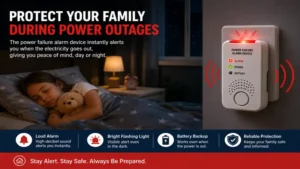
Scenario 2: The Deep Rural Sump Pump Basin. A homeowner installs an ultra-loud, non-connected physical siren in an isolated country house crawlspace. While the 100 dB output works flawlessly, the owner spends weekdays working an hour away in the city center. The alarm blares continuously to an empty basement while the water level overflows. Here, an analog physical alarm is useless; a cloud-tethered heartbeat monitor or smart cellular dialer must be selected.
📊 Strategic Deep-Dive Analyses
Comprehensive Multi-Variant Specifications & Value Matrix
| Target Operational Environment | Optimal Tracking Technology | Key Structural Parameter | Total Cost of Ownership Profile | Best Product Match |
| Low-Accessibility Crawlspaces | Localized Mechanical Audio | Moisture-Insulated Casing | Zero Ongoing Plan Expenses | Reliance Controls THP205 |
| Commercial Network Closets | Cloud-Side Server Ping | 2.4 GHz Router Stability | Mid-Tier Initial Unit Cost | Proteus M5 Wi-Fi Sensor |
| Rural Farms / Cabins | Cellular Band Transceiver | Tower Proximity (LTE-M) | Monthly Account Access Fees | Marcell System SP-500 |
| Industrial Processing Plants | 3-Phase Voltage Terminal | DIN-Rail Mount System | High Upfront Infrastructure Cost | F智能 Industrial GSM |
📈 Analytical Interpretation
The data shows that minimizing your long-term total cost of ownership requires a careful balancing act against real-time data access. If you purchase an analog unit to avoid a monthly subscription fee, you sacrifice all remote visibility, rendering the system ineffective for empty or unstaffed structures. Conversely, paying a recurring monthly cellular tariff makes absolute sense for high-stakes facilities where missing an alert could result in thousands of dollars of spoiled inventory or ruined structural foundations.
Analysis-Driven Technical Insights
Features That Actually Matter (And Those That Don’t)
When shopping for a monitoring unit, it is easy to get distracted by marketing hype. In my consulting experience, you must learn to separate critical engineering characteristics from gimmicks.
CRITICAL CHARACTERISTICS (Focus Here)
├── Cloud-Side Heartbeat Checks (Verifies device connectivity even if the router dies)
├── Adjustable Auditory Decibel Potentiometers (Prevents deafening maintenance crews)
└── Sealed Polysilicon Contact Elements (Resists corrosion in humid environments)

MARKETING GIMMICKS (Ignore These)
├── Built-In Multi-Color Ambient Nightlights
└── Gold-Plated External Prongs
Focus your budget on acquiring units that offer a Cloud-Side Heartbeat check. This background feature pings your device from a remote datacenter every few minutes. If your local equipment vanishes due to a total facility blackout, the cloud server recognizes the dropped ping and alerts you immediately, even though your local hardware is completely dark.
Conversely, avoid paying extra for units boasting gold-plated external prongs or built-in multi-color ambient nightlights. These additions do nothing to improve core circuit reliability during a major emergency and simply add unnecessary failure points to the housing.
Common Mistakes When Buying Outage Alarms
The most prevalent pitfall I observe property owners make is choosing an internet-dependent system without mapping out their local network infrastructure. If your smart monitoring device is plugged into the far corner of your basement while your primary modem sits upstairs on a standard, unprotected wall outlet, a power failure will kill your internet router instantly. The smart device will immediately detect the voltage drop, but it will be completely unable to broadcast its warning message because its gateway to the web is dead.
To circumvent this systemic point of failure, always ensure that your core internet gateway, modem, and any auxiliary network switches are plugged directly into a high-quality Uninterruptible Power Supply (UPS) equipped with battery backup. This step guarantees that your home network remains live for at least 30 to 60 minutes following a grid collapse, providing an ample window for your wireless outage sensors to transmit their critical emergency pings to the outside world.
❓ Frequently Asked Questions
❓ Will a Wi-Fi power failure alarm device notify me if my home internet router loses power?
✅ Yes, provided you choose a model that features cloud-side heartbeat monitoring. The remote server notes the missing signal connection from your home device within minutes and automatically dispatches a network-offline notification to your smartphone…
❓ How long do the internal batteries last on an analog power failure alarm device during a continuous blackout?
✅ Most high-quality analog alarms can sound their internal physical sirens continuously for 24 to 48 hours on a fresh set of alkaline or lithium batteries. Once power is restored, modern circuit boards automatically isolate the backup cell…
❓ Can I plug my home sump pump directly into the back of a power monitoring device?
✅ Some specialized pass-through models allow this configuration, but you must strictly verify that the device’s maximum amperage rating matches or exceeds your pump’s startup current draw to prevent overloading the internal relays…
❓ Do cellular-based power failure alarm device options work during wide-scale regional grid blackouts?
✅ Yes, because major cellular provider towers are equipped with extensive industrial backup generators that keep cellular networks functional for several days. This makes cellular models significantly more reliable than local residential internet connections during severe weather events…
❓ Is there a monthly subscription fee required to use a smart power outage alarm app?
✅ For standard Wi-Fi models, cloud push alerts and emails are typically free. However, premium cellular models require a monthly or annual data subscription fee to cover the costs of the cellular network connection…
Conclusion
A dedicated power failure alarm device is an indispensable safety asset for any property owner looking to secure their critical equipment against unexpected utility disruptions. By selecting a system that aligns with your local wireless network coverage, environmental demands, and budget constraints, you can prevent major property damage before it starts. Don’t wait for a flooded basement or ruined inventory to reveal the weak links in your home or business defenses—integrate a reliable power monitor into your utility configuration today.
Recommended for You
- Best Outdoor Timer Switch Picks for 2026: 5 Top Tested Models
- 5 Best Energy Saving Surge Protector Models for 2026: Expert Test
- 5 Best Wall Outlet with USB Fast Charging Choices for 2026
Disclaimer: This article contains affiliate links. As an Amazon Associate, I earn from qualifying purchases. If you purchase products through these links, we may earn a small commission at no additional cost to you.
✨ Found this guide helpful? Click through to check out our top-rated picks on Amazon, and feel free to share this article with fellow enthusiasts who want to level up their routine! 💬🤗